
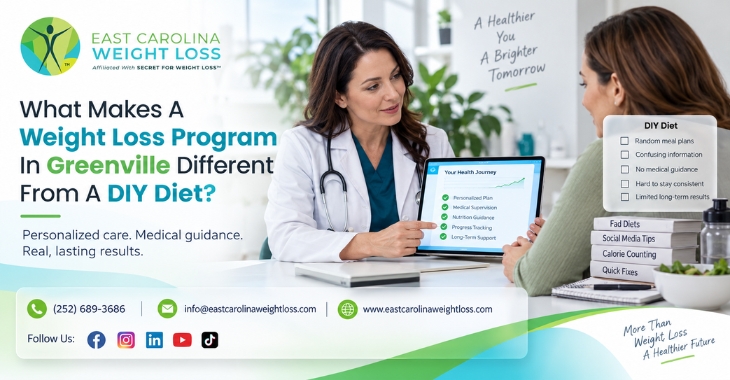
Trying to lose weight on your own can seem straightforward. You find a diet online, change your meals, start exercising, and hope the results follow. The challenge often comes when progress slows, motivation drops, or you’re unsure whether your approach is right for your health. A structured program can provide professional guidance and a clearer path forward. When searching for Weight Loss Programs Near Me, understanding the difference between professional support and a DIY approach can help you make a more informed decision.
What Is a DIY Diet?
A DIY diet is generally an approach you manage independently. You choose the foods, exercise routine, calorie goals, and strategies without regular guidance from a healthcare professional. There are plenty of useful nutrition and fitness resources available online, but not every recommendation is appropriate for every person. Without professional input, it can also be difficult to know why your progress has slowed or whether certain changes are suitable for your individual circumstances.
How a Structured Weight Loss Program Is Different
A structured weight management program starts with understanding the individual rather than providing the same plan to everyone. Your health history, lifestyle, eating habits, activity level, goals, and previous weight-loss experiences can all be considered when developing an appropriate approach. This can make the process more organized and provide a clearer way to monitor progress.
Personalized Goals Matter
A professional program can help establish realistic goals based on your individual situation. Instead of chasing someone else’s results, you can focus on measurable progress that makes sense for your health and lifestyle.
Professional Guidance Can Reduce Guesswork
One of the biggest differences between a DIY diet and professional support is the ability to ask questions and receive guidance when challenges arise. If your progress slows, you don’t necessarily have to start another diet from scratch. Your provider can review what’s happening and determine whether your current approach needs adjustment. Professional guidance can also help you understand which strategies may be appropriate for your circumstances.
Nutrition Is More Than Following a Meal Plan
A DIY diet may rely on a meal plan downloaded from the internet or recommendations from social media. A structured program can take your food preferences, lifestyle, health considerations, and daily routine into account. This can make healthy eating more practical because the goal is not simply to follow a temporary menu. It’s about developing habits that can continue over time.
What About Exercise?
Exercise can be an important part of weight management, but the right routine depends on your current fitness level and physical abilities. A DIY approach may encourage you to follow a popular workout without considering whether it’s appropriate for you. Professional guidance can help you choose realistic activities and gradually build consistency. The goal doesn’t have to be an intense workout every day. A sustainable activity routine is often easier to maintain.
Progress Monitoring Makes a Difference
With a DIY diet, you’re usually responsible for deciding whether your approach is working. A structured program can provide regular follow-up and progress monitoring. This creates opportunities to discuss challenges and make adjustments when necessary. Progress can also involve more than the number on the scale. Changes in activity, eating habits, consistency, and other health-related goals may provide useful information.
Long-Term Support vs. Short-Term Motivation
DIY diets often depend heavily on personal motivation. That can work for some people, but motivation naturally changes over time. A structured program provides ongoing accountability and professional support. This can be particularly useful when life becomes busy, progress slows, or previous habits become difficult to manage. The goal is to build a sustainable routine rather than depend on motivation alone.
Why Personalized Medical Guidance May Matter
Weight management can be influenced by factors such as medications, health conditions, sleep, stress, and lifestyle. A DIY diet doesn’t always account for these factors. Professional weight management allows these considerations to be discussed before deciding which approach may be appropriate. For individuals comparing Best Weight Loss Programs NC, looking at the level of professional guidance offered can be just as important as comparing program features.
Why Choose East Carolina Weight Loss?
East Carolina Weight Loss provides structured weight management support designed around individual needs and goals. The focus is on helping patients understand their options and develop a practical approach rather than relying solely on generic diet advice. For people in Greenville, NC, having access to professional support can make weight management more structured and easier to navigate.
Frequently Asked Questions
Is a professional weight loss program better than a DIY diet?
It depends on the individual. Professional programs provide structured guidance and monitoring, while a DIY approach allows you to manage everything independently.
What is the main difference between a DIY diet and a weight loss program?
A structured program generally provides professional guidance, personalized planning, progress monitoring, and ongoing support that may not be available with a DIY diet.
Can I lose weight without professional help?
Some people successfully manage weight independently. However, professional support can be useful when you need personalized guidance or have challenges that make weight management difficult.
Why is personalized care important?
Individual health history, lifestyle, eating habits, activity levels, and goals can differ significantly. Personalized care allows these factors to be considered.
Does a weight loss program include exercise guidance?
Depending on the program, exercise and physical activity guidance may be included as part of a broader weight management approach.
How does progress monitoring help?
Monitoring can help identify what’s working, highlight challenges, and provide opportunities to adjust your approach when necessary.
Can a structured program help with long-term weight management?
A program that includes sustainable lifestyle habits and ongoing support can help you work toward maintaining progress over time.
What should I consider when comparing weight loss programs?
Consider professional qualifications, personalization, treatment options, progress monitoring, communication, accessibility, and long-term support.
Why choose East Carolina Weight Loss?
East Carolina Weight Loss offers structured weight management support focused on individual needs and goals.
How can I get started?
A consultation can help you discuss your goals, concerns, and current challenges before exploring appropriate weight management options.
Final Thoughts
A DIY diet gives you complete control, but it also means you’re responsible for researching your options, creating your plan, monitoring progress, and deciding when something isn’t working. A structured weight loss program adds professional guidance, personalized planning, progress monitoring, and ongoing support.
Neither approach is identical for everyone. The right choice depends on your health, goals, preferences, and the level of support you need. If you’re searching for Weight Loss Programs Near Me, consider whether professional guidance could help you create a more sustainable approach to weight management.
Start Your Weight Management Journey
East Carolina Weight Loss can help you explore structured weight management options based on your individual goals and circumstances. Contact the team to discuss your needs and learn more about available support.