
Weight Loss Plateau: Why It Happens + Proven Ways to Break Through
If the scale has not moved in weeks, it usually means your body is burning fewer calories than it used to, or you are taking in a little more than you think. The good news is that most stalls are fixable with small, targeted adjustments instead of extreme dieting.
In Greenville, Winterville, Ayden, Farmville, and across Pitt County, we see this pattern all the time: early success, then a stuck phase that feels confusing and frustrating. It can happen even when you are meal prepping, walking, and saying no to treats.
This guide explains why it happens, how to spot what is really going on (fat loss vs water retention), and the most reliable ways to restart progress without burning out.
✅ Want a plan built around your body, schedule, and labs? Explore plateau solutions in Greenville, NC and see what a structured reset looks like.
Why the scale stops moving (even when you are “doing everything right”)
A stall is rarely about willpower. Most of the time it is math, biology, and measurement noise happening at the same time. As your body gets smaller, it requires less energy to move, breathe, and function. That means the same meals and workouts that worked at the start may no longer create the same calorie deficit.
Your metabolism and daily burn can drop as you lose weight
When you lose weight, your resting energy needs typically decrease because you have less body mass and often a little less lean tissue too. On top of that, many people experience “metabolic adaptation” (also called adaptive thermogenesis), where energy expenditure drops more than expected for the new body size. This is one reason progress can slow after the first phase.
Practical tip: Think of your plan like a thermostat. Early on, small changes cause big movement. Later, you may need a small recalibration, not a total overhaul.
“Calorie creep” is real (and it is usually unintentional)
These are common ways intake quietly rises without you noticing:
✅ Portions drift up (especially snacks, nuts, cheese, cooking oils)
✅ Taste testing while cooking becomes a daily habit
✅ “Healthy” drinks add calories (sweetened coffee, smoothies, juice)
✅ Weekends erase weekday deficits
If you want a simple reset that does not feel obsessive, start with portion consistency for 7 days. East Carolina Weight Loss has a helpful read on portion control habits here: portion control in weight management.
Water retention can hide fat loss for days (or weeks)
Even when fat is coming off, the scale can stay flat because of:
-
Higher sodium meals
-
More intense workouts (muscle inflammation holds water)
-
Hormone shifts (common around menstrual cycles)
-
Poor sleep and stress (can increase water retention and appetite)
That is why a “plateau” should be defined carefully: many clinicians look for at least 2–4 weeks with no change in average weekly weight trend, not a few random weigh-ins. Some stalls last a few weeks, others can last longer depending on the cause.
Your tracking method might be the problem, not your plan
If you only weigh once a week, you can miss the trend. If you weigh daily but react emotionally to one number, you can overcorrect. A middle-ground approach that works well:
✅ Weigh 3–4 mornings per week
✅ Track the average (not the highest or lowest day)
✅ Pair it with waist measurement every 2 weeks and progress photos monthly
Quick Reference Table: Common stall causes and what to try first
| What’s happening | What you might notice | What to try first |
|---|---|---|
| Lower daily calorie burn | Same meals, slower results | Reduce intake 100–200 calories OR increase steps 1,500–2,500/day |
| Portion drift | “I eat healthy” but no losses | Weigh/measure 3 common foods for 7 days |
| Water retention | Scale flat, clothes slightly looser | Keep plan steady 7–10 days, prioritize sleep, moderate sodium |
| Too much cardio, not enough strength | Tired, hungry, “skinny-fat” feeling | Add 2 strength sessions/week, keep cardio moderate |
| Under-recovery | Sore, moody, poor sleep | Deload week, focus on protein, earlier bedtime |
How to get past plateau in weight loss (without cutting your calories in half)
The fastest way out is rarely “eat way less.” The most reliable way out is a short diagnostic phase, then one adjustment at a time. Here is a framework we use with clients in Pitt County who want predictable progress and fewer guesswork changes.
Step 1: Confirm it is a real stall (and not normal fluctuation)
For 14 days, track these three things:
✅ Morning scale weight (3–7 days per week)
✅ Waist measurement (once at day 1 and day 14)
✅ A simple habit score (protein goal met? steps met? sleep target met?)
If weight trend and waist measurement are both flat after 2 weeks, you likely need a change. If waist is shrinking but scale is not, you may be recomposing (fat down, water or glycogen up), especially if you recently increased strength training.
Step 2: Run a 7-day “reality check” on intake
This is not about perfection. It is about accuracy.
✅ Track everything you eat and drink for 7 days
✅ Measure oils, dressings, nut butters, and snacks (these are frequent underestimates)
✅ Keep weekends in the log (they matter the most)
If your progress stalled, the most common discovery is that intake is higher than assumed, even with “clean” food.
Helpful resource: If you want a clear approach to calorie targets, see how to calculate calories for a healthy plan.
Step 3: Choose ONE lever to pull first (diet OR activity)
Pick one of these adjustments and hold it steady for 14 days:
Option A (diet lever): reduce daily intake by ~100–200 calories
-
Example: remove one liquid calorie drink, reduce cooking oil by 1 teaspoon, or swap a large snack for fruit and Greek yogurt.
Option B (activity lever): add 1,500–3,000 steps per day
-
This often feels easier than cutting food, and it improves appetite control for many people.
Option C (strength lever): add 2 strength sessions per week
-
Strength training helps preserve lean mass while dieting, which supports a healthier metabolism over time.
Step 4: Tighten consistency, not intensity
Instead of “go harder,” try “go steadier”:
✅ Keep meal timing predictable 5–6 days/week
✅ Keep protein consistent
✅ Keep sleep and wake times within a 60–90 minute window
This is where coaching often helps. A good coach reduces decision fatigue and helps you pick the smallest change that still moves the needle.
If you want hands-on accountability, check out a weight loss coach in Greenville, NC.
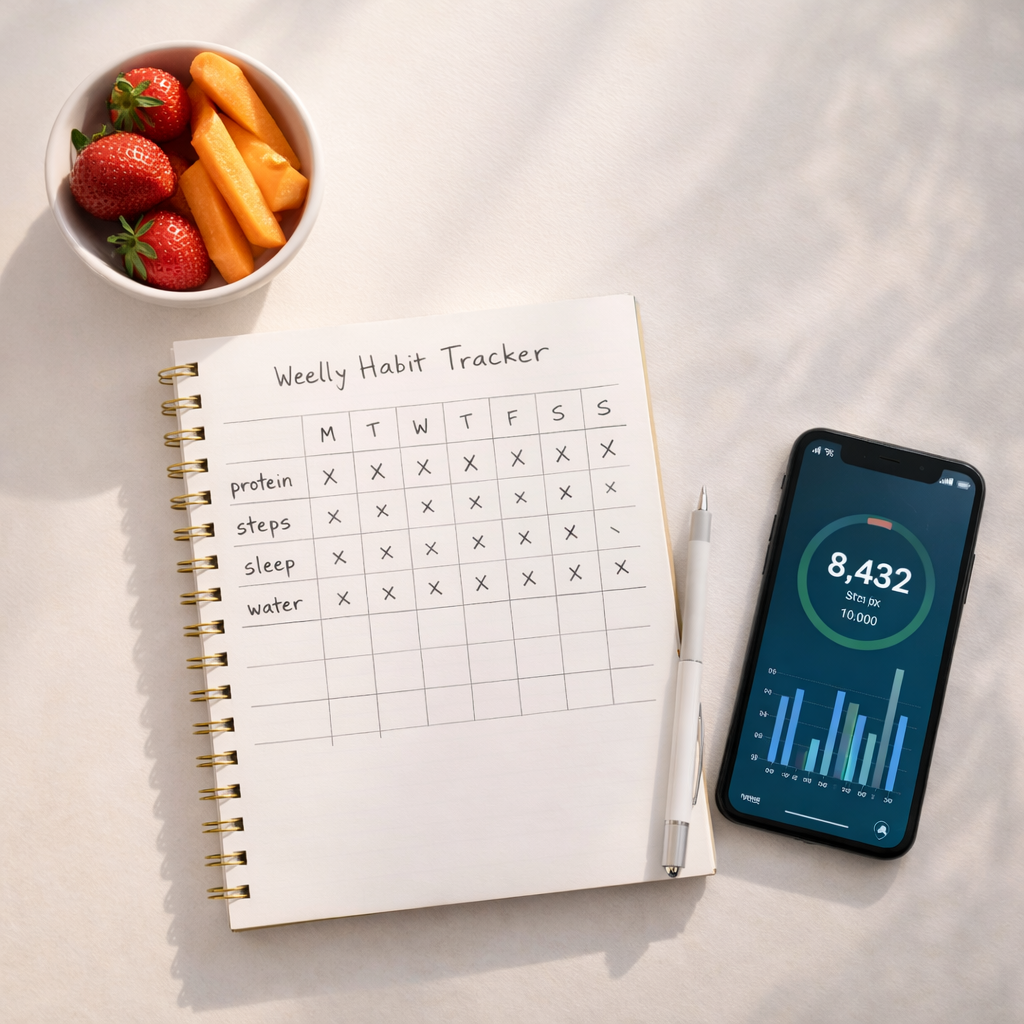
Training and movement tweaks that work when cardio alone stops working
Many people respond to stalls by adding more cardio. Sometimes that helps, but often it backfires by increasing hunger and reducing recovery. A smarter approach is to combine strength, steps, and a manageable amount of aerobic work.
Strength training protects the “engine” you are shrinking
When weight drops, losing some lean mass is common. Strength training can help preserve lean tissue and improve body composition while dieting. It also makes your body better at using carbohydrates and can improve how you feel day to day.
A beginner-friendly weekly structure:
✅ 2 days full-body strength (45–60 minutes)
✅ 2–3 days brisk walking or cycling (20–40 minutes)
✅ 1 day optional mobility or light activity
Steps matter more than most people realize (NEAT)
NEAT is non-exercise activity like walking at work, errands, pacing while on calls, and taking stairs. During dieting, NEAT often drops unconsciously. You may be moving less even if workouts stay the same.
Try this in Greenville or Winterville:
✅ Park farther away
✅ 10-minute walk after lunch
✅ “Two short walks” daily (morning + evening)
Use guidelines as a baseline, then personalize
For general health, adults are commonly advised to aim for at least 150 minutes of moderate-intensity activity weekly plus 2 days of strength work. If your goal is fat loss, you may need more than the baseline, but the baseline is a solid start.
If you add intensity, do it carefully
HIIT can help some people, but it is not required. If you do it, keep it short and recoverable:
✅ 1–2 sessions per week
✅ 10–20 minutes total intervals
✅ Keep strength sessions protected (do not sabotage recovery)
Nutrition strategies that break stalls without making you miserable
This is where most “plateau advice” gets extreme. Instead, focus on the few levers that have the biggest return: protein, fiber, consistency, and a plan for social eating.
Build meals around protein and fiber first
A simple plate method:
✅ Protein: a palm-sized serving at each meal
✅ High-fiber carbs: fruit, beans, oats, potatoes, whole grains (portion matched to your plan)
✅ Vegetables: at least 2 colors per day
✅ Fats: measured, not guessed (oil and nuts add up fast)
Why it works: Protein and fiber increase fullness, support muscle retention, and make calorie control feel less punishing.
Consider a structured “refeed” instead of an unplanned cheat day
People often ask if a cheat day will “shock” the body. In theory, higher intake can temporarily influence hormones like leptin, but unplanned overeating can also erase a weekly deficit fast. Many experts recommend a more controlled “refeed day” if you use this strategy at all, meaning a planned increase (often from carbs) while keeping it structured.
A practical approach that avoids chaos:
✅ Refeed meal (not a full day)
✅ Keep protein consistent
✅ Increase carbs, keep fats moderate
✅ Resume normal plan the next meal
What is the “2 2 2 rule” people talk about?
There is no single official definition. Online, one common version is: 2 servings of fruit, 2 servings of vegetables, about 2 liters of water, and 2 walks per day. Treat it as a simple habit framework, not a medical rule.
If you like simple rules, this can help rebuild consistency, especially if your stall is coming from chaotic routines rather than “metabolism problems.”
Sleep and stress can be the hidden bottleneck
Short sleep increases hunger signals, cravings, and decision fatigue. High stress can push you toward comfort eating and reduce NEAT. If you only fix one recovery habit, fix bedtime.
Quick win: set a “screens off” time 30 minutes before bed, even 4 nights per week.
Which option is best when you are stuck: DIY fixes vs coaching vs medical support
Some stalls respond quickly to simple behavior changes. Others are a sign you need professional structure, especially if you have a history of yo-yo dieting, metabolic conditions, or a lot of weight to lose.
When DIY is usually enough
DIY tends to work when:
✅ You lost progress because routines slipped
✅ Tracking has been inconsistent
✅ Steps dropped and portions drifted
✅ Sleep got worse and cravings increased
In these cases, the 7-day reality check + one lever change is often enough.
When coaching is the better fit
A coach is especially helpful when you:
✅ Need accountability and weekly adjustments
✅ Struggle with consistency on weekends or social events
✅ Want workouts and nutrition aligned (not random)
✅ Want a plan you can sustain for months
This is why many people in Farmville and Ayden choose coaching even when they already “know what to do.” Knowing and doing are different skills.
When medical support is the most appropriate option
Consider a clinical consult if:
✅ You have symptoms that suggest hormonal or thyroid issues
✅ You are dealing with insulin resistance, PCOS, or sleep apnea
✅ Hunger feels unmanageable despite reasonable calories
✅ You have been stuck for 8–12+ weeks with consistent habits
Clinical programs can evaluate labs, tailor treatment, and discuss options like prescription support when appropriate. Evidence-based reviews describe a range of approaches for managing stalls, including dietary adjustments, activity changes, behavior strategies, and (for some patients) medications or procedures.
Comparison Table: Best next step by situation
| Your situation | Most helpful next step | Why it works |
|---|---|---|
| Inconsistent routine, weekends derail you | Habit reset + simple tracking | Fixes the most common cause: inconsistency |
| You are doing “all the right things” but not seeing trend changes | Coach-guided audit | Finds the smallest change that creates movement |
| Hunger is intense, cravings high, energy low | Medical consult + structured plan | Looks for underlying drivers and adds tools |
| Strength training is missing | Add 2 strength days weekly | Supports lean mass and body composition |
✅ Ready for a personalized plan? Request a consultation and get a clear next step based on your history, lifestyle, and goals.
Next Steps: weight loss plateau
A stuck phase does not mean you failed. It usually means your body adapted, your routine drifted, or your measurement method is hiding progress.
Start with a short diagnostic window, choose one lever to change, and give it two consistent weeks before you judge results. If you want faster clarity and less trial-and-error, a structured program can help you move forward with confidence.
Frequently Asked Questions
How long can a plateau last when losing weight?
Most stalls last a few weeks, but they can stretch longer depending on the cause. If the issue is water retention from workouts, stress, or sodium, you may see changes within 7–14 days once routines stabilize. If the cause is a true energy balance shift (your body now burns fewer calories), the stall can last weeks to months until intake or activity is adjusted. A good rule is to look at a 2–4 week weight trend plus waist measurements before calling it “real.”
What is the 2 2 2 rule for weight loss?
It is a simple habit framework, not an official medical guideline. One popular version online is: 2 servings of fruit, 2 servings of vegetables, about 2 liters of water, and 2 walks per day. The value is that it reduces decision fatigue and nudges you toward higher-volume foods and more movement. If your stall is coming from inconsistency, this can help you rebuild momentum. If your stall is metabolic or medical, it may not be enough on its own.
Can a cheat day help break a plateau?
Sometimes it helps mentally, but it can also erase your weekly deficit quickly. The theory is that a higher-calorie day may temporarily raise hormones involved in appetite and energy regulation, but results vary and the “benefit” can be outweighed by overeating. A more reliable option is a planned refeed meal or refeed day, where calories rise in a structured way (often via carbs) while protein stays consistent and fats stay controlled. That gives you a psychological break without turning it into a weekend spiral.
How to break weight gain plateau?
First, confirm whether it is true gain or short-term water weight. If the scale is up but you had a salty meal, poor sleep, travel, or hard workouts, water retention can mask fat loss or mimic gain. If weight is trending up for 2–3 weeks, treat it like a calibration issue: tighten portions for 7 days, remove liquid calories, and add daily steps. Also review weekends, because two high-calorie days can outweigh five good ones. If gain continues despite consistency, consider a clinical review to rule out medication effects or metabolic factors.
How to shock your body out of a plateau?
The best “shock” is a controlled, measurable change, not a crash diet. Choose one lever: add 2 strength sessions weekly, increase steps by 2,000 per day, or reduce intake by 100–200 calories. Keep it steady for 14 days and track the weekly average weight plus waist measurement. Randomly slashing calories can increase fatigue and cravings, making consistency harder. A structured approach aligns with evidence-based plateau management strategies that focus on diet, activity, behavior, and (when appropriate) medical tools.