

Weight Loss Pills: What Works, What’s Risky, and Safer Options (Greenville, NC)
If you are trying to lose weight in Greenville, Winterville, Ayden, Farmville, or anywhere in Pitt County, the safest “pill” choice is the one matched to your health history and combined with a plan you can keep doing. The risky choices are usually the ones sold with big promises, vague ingredients, or “no prescription needed” shortcuts.

A lot of people start this search after the same moment: the scale will not budge, hunger feels louder than willpower, and social media makes it seem like everyone has a simple fix. Some medications can genuinely help, but there is a big difference between FDA approved treatment, over-the-counter products, and internet “fat burners” that are not what they claim.
This guide breaks down what tends to help, what tends to backfire, and what safer options look like if you want progress you can maintain.
📌If you want a structured approach with professional support, you can Request a consultation here.
Why people look for a pill (and why results vary so much)
There are a few honest reasons pills feel appealing:
First, hunger and cravings are not just “discipline.” Sleep, stress, hormones, medications, and insulin resistance can all influence appetite and how your body partitions calories.
Second, busy schedules are real. Between work, family, and commuting around Greenville and Pitt County, it is easy to miss meals, grab convenience foods, then overcorrect at night.
Third, many people have already tried “eat less and move more” and felt like they did everything right… yet the outcome did not match the effort.
The hard truth is this: even the most effective medication works best when it is paired with realistic nutrition, movement, and accountability. Stopping medication often leads to regain if the habits underneath never changed.
What actually drives fat loss (so you can judge any option clearly)
Before comparing products, it helps to anchor to the basics that do not change:
Fat loss still requires a calorie deficit over time. The difference is that some treatments make the deficit easier to stick to by reducing appetite, improving fullness, or limiting fat absorption.
A practical way to think about it:
✅ If a product helps you eat fewer calories without feeling miserable, it can support fat loss.
✅ If it “works” by dehydrating you, speeding your heart, or making you live in the bathroom, it may drop scale weight fast but is rarely sustainable.
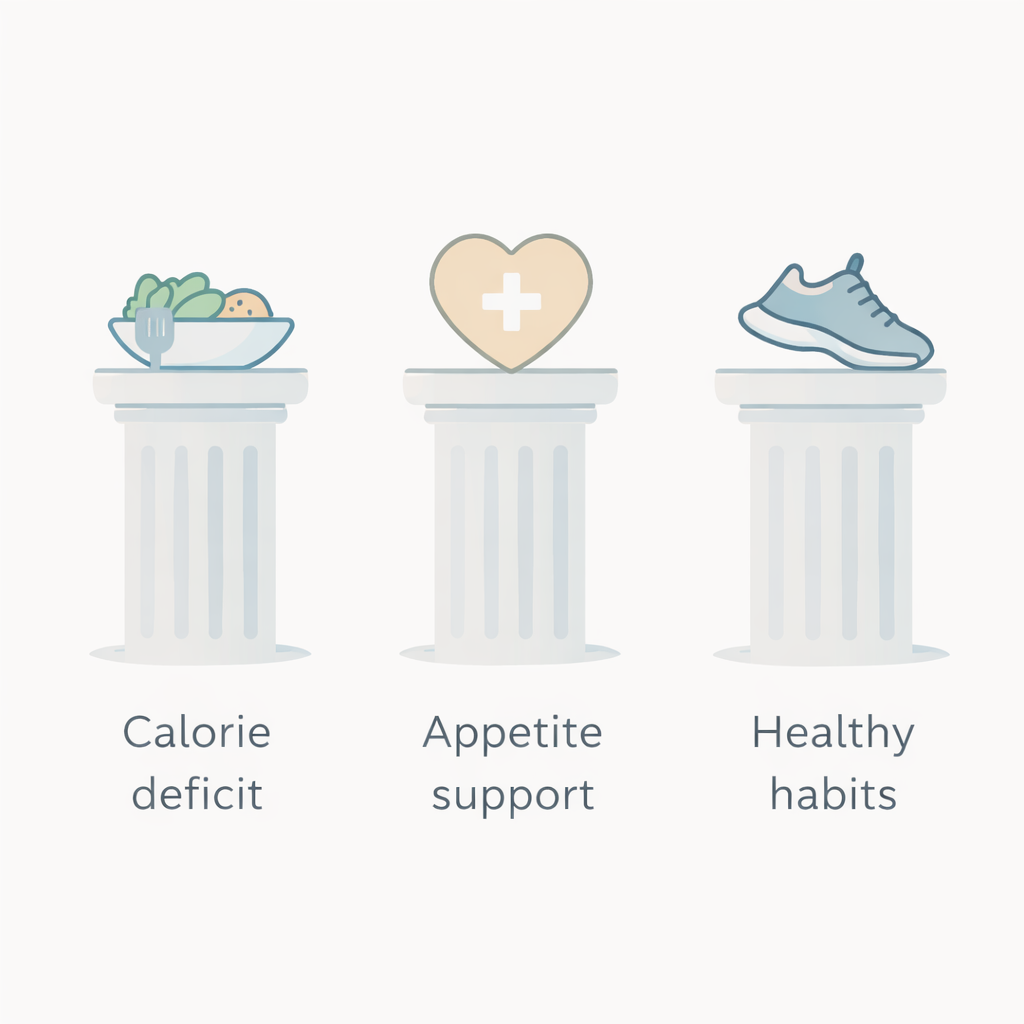
If you are aiming for speed, keep expectations grounded. A healthy pace for most people is about 1 to 2 pounds per week, and faster loss often comes with higher rebound risk and more muscle loss.
How to spot risky products fast (especially online)
A lot of the danger is not “side effects.” It is not knowing what you are taking.
The FDA has repeatedly warned that many products marketed as dietary supplements for weight loss may contain hidden drugs or chemicals, and the agency cannot test everything being sold online.
Here are common red flags:
✅ “Works like a prescription” or “same as Ozempic” claims
✅ No clear ingredient list, or a “proprietary blend” with no amounts
✅ Overseas shipping with no U.S. company information
✅ Fake “doctor recommended” badges and before/after photos only
✅ “No need to diet” promises
If you are considering anything you found on social media, a safer move is to ask a clinician to review the label and your medical history first. That one step can prevent interactions with blood pressure meds, antidepressants, thyroid meds, and more.
Prescription options people ask about (and what the evidence really says)
When someone asks, “what is the strongest weight loss prescription pill,” they usually mean: “Which option has the biggest average results?”
In research, GLP-1 and dual-incretin therapies have produced larger average weight loss than older oral medications, but “strongest” still depends on your health profile, side effects, and what you can keep taking safely.
Below is an at-a-glance comparison to help you understand the landscape.
Table 1: Common medication categories and what to expect (high-level)
| Option type | How it works (plain English) | Typical outcomes in studies (broad) | Common issues | Best fit (in general) |
|---|---|---|---|---|
| GLP-1 / incretin therapy (examples include semaglutide) | Helps fullness, lowers appetite, slows stomach emptying | Often double-digit % body-weight loss in longer trials | Nausea, constipation, reflux, cost, insurance hurdles | People needing significant appetite support |
| Dual incretin therapy (tirzepatide class) | Similar appetite and fullness support, often larger average loss | In trials, some doses approached ~20% average loss | GI side effects, cost, access | People with higher BMI or metabolic risk |
| Oral GLP-1 (newer daily pill option) | Similar pathway, daily dosing | Emerging real-world adoption; may be slightly less than injections for some | GI issues, adherence to daily routine | Those who prefer pills over injections |
| Phentermine class (short term) | Stimulant-like appetite suppression | Moderate loss, often used for limited periods | Jitters, heart rate, BP concerns, sleep issues | Carefully selected patients without contraindications |
| Phentermine/topiramate ER | Appetite support plus craving control | In studies, mid to high single-digit % average loss | Tingling, mood changes, pregnancy risks | Those needing oral option with structured monitoring |
| Naltrexone/bupropion ER | Craving and reward-driven eating support | Often modest to moderate loss | Nausea, headache, BP effects, interactions | Emotional eating patterns, selected patients |
| Orlistat (RX and OTC) | Blocks some fat absorption | Modest loss; best with low-fat eating | GI effects if diet is high fat | People wanting non-stimulant OTC option |
Sources for medication classes approved for chronic weight management and related summaries:
Semaglutide trial reference (STEP 1):
Tirzepatide trial reference (SURMOUNT-1):
Important note: This table is informational. Eligibility, dosing, and safety depend on your medical history, labs, and current medications.
“Is there an oral pill like Ozempic?” (and what changed recently)
For a long time, most of the highest-impact options were injections. That is changing.
A daily oral GLP-1 option for weight management has entered the U.S. conversation, with reporting around FDA approval in late 2025 and launch timing in early 2026.
What to know if you are in Greenville or nearby towns:
✅ A pill form can reduce needle barriers and may be easier for some people to stay consistent with.
✅ Marketing can overpromise. The FDA has recently challenged “false or misleading” advertising claims for an obesity pill campaign, which is a reminder to rely on evidence and medical guidance, not commercials.
✅ “Oral” does not automatically mean “side effect free.” Many of the same GI issues can still happen.
If your goal is commercial intent (you want to choose an option), the best move is usually to talk through: your BMI, blood pressure, glucose markers, current meds, and your past dieting history. That is how you avoid wasting money on the wrong match.
The biggest safety issue right now: counterfeits and “no-prescription” sellers
If you are asking “Can I buy Ozempic over the counter?” the direct answer is no, it requires a prescription.
The bigger concern is that counterfeit versions of semaglutide products have been found in the U.S. supply chain, and the FDA has warned consumers about this risk.
So if you see:
✅ “No prescription” offers
✅ “Imported pens”
✅ Random social media sellers
✅ Sites that do not use state-licensed pharmacies
Treat it as a safety red flag, not a bargain.
Which option is most likely to be “best” for you in Pitt County
Instead of chasing the single “#1 pill,” a better question is: which approach fits your body and your life right now?
Use this simple filter:
-
Do you need strong appetite control, or is your bigger issue consistency?
-
Do you have high blood pressure, anxiety, insomnia, or heart history (which can change what is safe)?
-
Are you trying to lose a moderate amount (10 to 20 pounds) or a larger amount?
-
Do you want an oral plan, or are injections acceptable?
-
What can you afford monthly without stopping and restarting?
Table 2: Quick decision guide (informational, not medical advice)
| If your main problem is… | The safer “starting point” often looks like… | Why |
|---|---|---|
| Constant hunger and large portions | Clinician-guided appetite support plus a structured eating plan | Hunger is the lever that breaks most plans |
| Cravings, emotional eating, night snacking | A plan focused on meal timing, protein, sleep, and behavior support | Cravings are often stress and routine driven |
| Plateau after early progress | Strength training focus plus a protein target and tighter tracking for 2 weeks | Plateaus are often drift, not failure |
| You want fast results for an event | Reset expectations and aim for safe weekly loss | Extreme targets often rebound |
| You are tempted by online “fat burners” | Stop and verify ingredients with a professional | Hidden drugs are a real risk |
📌If you want a clinic-based plan with local accountability, see Medical Weight Loss in Greenville, NC
Safer “support” options that can make any medication work better
Even if you choose medication, your day-to-day routine decides whether the results stick.
Here is a Greenville-friendly example that works for many people (adjusted to your schedule):
Breakfast: Protein-forward (Greek yogurt or eggs) plus fiber (berries or oats)
Lunch: A simple plate method meal (half vegetables, palm of protein, fist of carbs)
Dinner: Keep it repeatable, not perfect
Movement: 20 to 30 minute walk most days plus 2 strength sessions weekly
Sleep: Protect a consistent bedtime, because sleep loss increases hunger signals
This is also where supplements can be useful when they are clinician-reviewed and used to support the plan, not replace it.
📌Explore doctor-developed support options here: Weight Loss Supplements

Want two practical “pillar” reads that pair well with this topic?
📌Calorie deficit for weight loss guide
📌Best exercise for weight loss in Greenville, NC
What did Kelly Clarkson do to lose weight? (and how to think about celebrity stories)
People ask this because celebrity results look simple, fast, and validated.
Publicly, Kelly Clarkson has said her weight change involved a prescription medication that was not Ozempic, and she has not confirmed the exact name. If you see anyone online claiming certainty, treat it as speculation unless it comes directly from her or a reliable primary interview.
The useful takeaway is not the celebrity medication. It is the decision process:
✅ She framed it as a health-driven choice (bloodwork and medical context).
✅ She used a clinician-involved approach rather than guessing from the internet.
✅ The specifics are personal, which is why copying a celebrity plan rarely works.
Next Steps for weight loss pills (Greenville, NC)
If you want the safest path with the highest chance of lasting results, focus on matching the option to your health profile, then build the habits that keep the results after the first month.
That “match” is exactly what a consultation is for: reviewing goals, medical history, current meds, side effect risks, and which approach fits your lifestyle in Greenville, Winterville, Ayden, Farmville, and the rest of Pitt County.
Frequently Asked Questions
Below are direct answers to the most common questions people ask when they are comparing medications, supplements, and other approaches.
What is the most effective weight loss pill?
The most effective option is the one you can take safely and stay consistent with. In clinical research, GLP-1 and dual-incretin therapies have shown larger average weight reductions than many older oral options, but effectiveness is not just about the biggest number in a study. Side effects, insurance coverage, and your health history decide what is realistic. Many people do best when appetite support is paired with a repeatable eating plan and weekly accountability.
How to lose 20 pounds in a month?
Losing 20 pounds in a month is an aggressive target for most people and often leads to rebound. A safer, more sustainable pace is usually about 1 to 2 pounds per week, which is linked to better long-term maintenance. If you see faster loss early, much of it can be water weight from dietary changes. If you feel stuck, a clinician can help you build a realistic deficit, protect muscle with protein and strength training, and avoid extreme restriction that makes cravings worse later.
Is there an oral pill like Ozempic?
Yes, oral GLP-1 weight management options are now part of the U.S. conversation, alongside older oral medications. Recent reporting has described FDA approval timing for an oral semaglutide product for weight loss and a launch window in early 2026. Oral does not mean “mild,” though. People can still experience nausea, constipation, or reflux, and results still depend on staying consistent with nutrition and activity. Your safest route is a medically guided choice based on your labs and medication history.
What is the #1 weight loss pill?
There is no single “#1” that fits everyone, because safety and adherence matter as much as potency. Some therapies show larger average loss in trials, but the best choice depends on contraindications (like blood pressure, anxiety, pregnancy risk, or medication interactions), cost, and what you can realistically keep doing for months, not weeks. This is why reputable clinics focus on personalization and monitoring rather than a one-size-fits-all recommendation.
What’s the cheapest alternative to Ozempic?
The cheapest alternative is usually a structured lifestyle plan, but the best-value alternative is the one you can sustain. Some older generics may be less expensive than newer GLP-1 therapies, but “cheap” can become costly if side effects, contraindications, or stop-start cycles derail progress. If cost is your biggest barrier, ask about options that combine coaching, calorie targets, and clinically reviewed supplements, then only add medication if the benefit clearly outweighs the cost for your situation.
What did Kelly Clarkson do to lose weight?
She has not publicly confirmed a specific medication name, and she has said it was not Ozempic. The actionable lesson is to avoid copying internet guesses. Celebrity stories rarely include full context: medical history, labs, coaching, or timeline. If you want a similar “health-first” approach, focus on getting your own numbers checked, picking an evidence-based plan, and tracking consistency. That is what produces repeatable outcomes.
How to get skinny without Ozempic?
The most reliable path is a calorie deficit you can keep, plus habits that protect muscle and reduce cravings. In practice, that means protein at most meals, 2 to 3 strength sessions weekly, walking on most days, and sleep consistency. These basics reduce hunger swings and help you look leaner because you are losing fat while maintaining muscle. If you need extra appetite support, you can still explore other clinician-guided options that fit your health profile.
Can I buy Ozempic over the counter?
No, Ozempic requires a prescription, and buying it from unverified sellers is a real safety risk. The FDA has warned consumers about counterfeit semaglutide products found in the supply chain, which is why it matters where medication comes from. If you are considering any GLP-1 therapy, use a licensed provider and a state-licensed pharmacy, and avoid “no prescription” social media offers.