
High-Protein Diet for Weight Loss: How Much You Need + Easy Meal Ideas
A high protein diet for weight loss can make dieting feel easier by keeping you full longer while you lose fat. Most people do best when they aim for a consistent daily protein target (often around 1.2 to 1.6 g per kg of body weight) and spread it across meals.
If you want a plan built for your lifestyle in Greenville, Winterville, Ayden, Farmville, or anywhere in Pitt County, you can request a consultation.
📌Before you change anything, it helps to understand the real driver of fat loss: a sustainable calorie gap. Here’s a practical walkthrough: calorie deficit for weight loss guide.
Why protein makes weight loss simpler (not just “faster”)
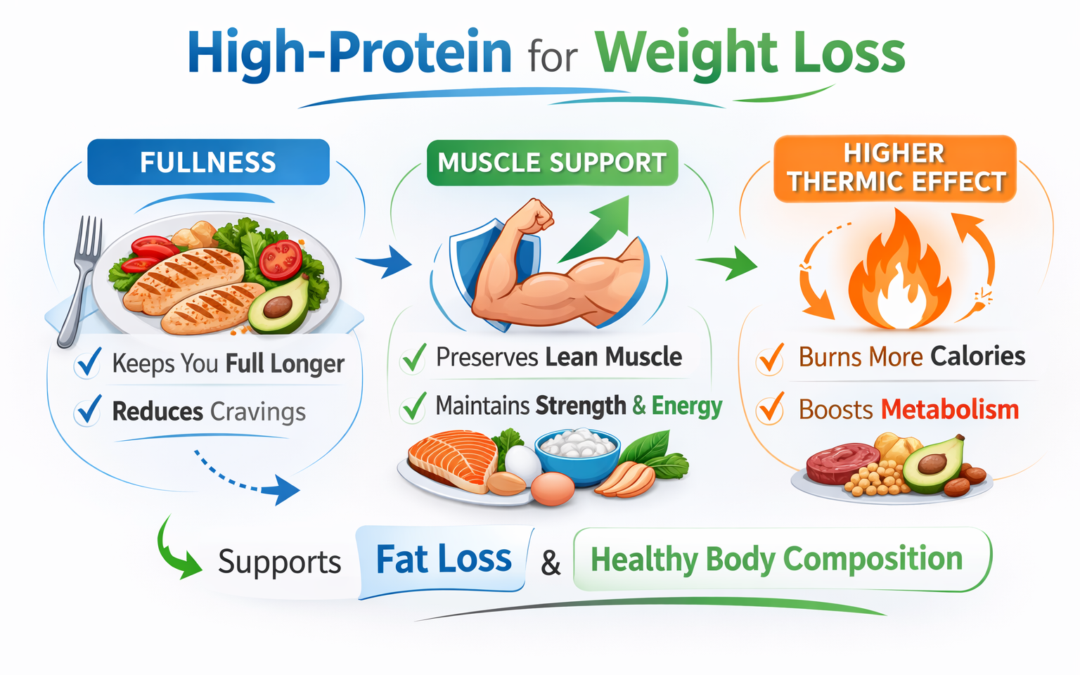
Protein has three unfair advantages when your goal is fat loss.
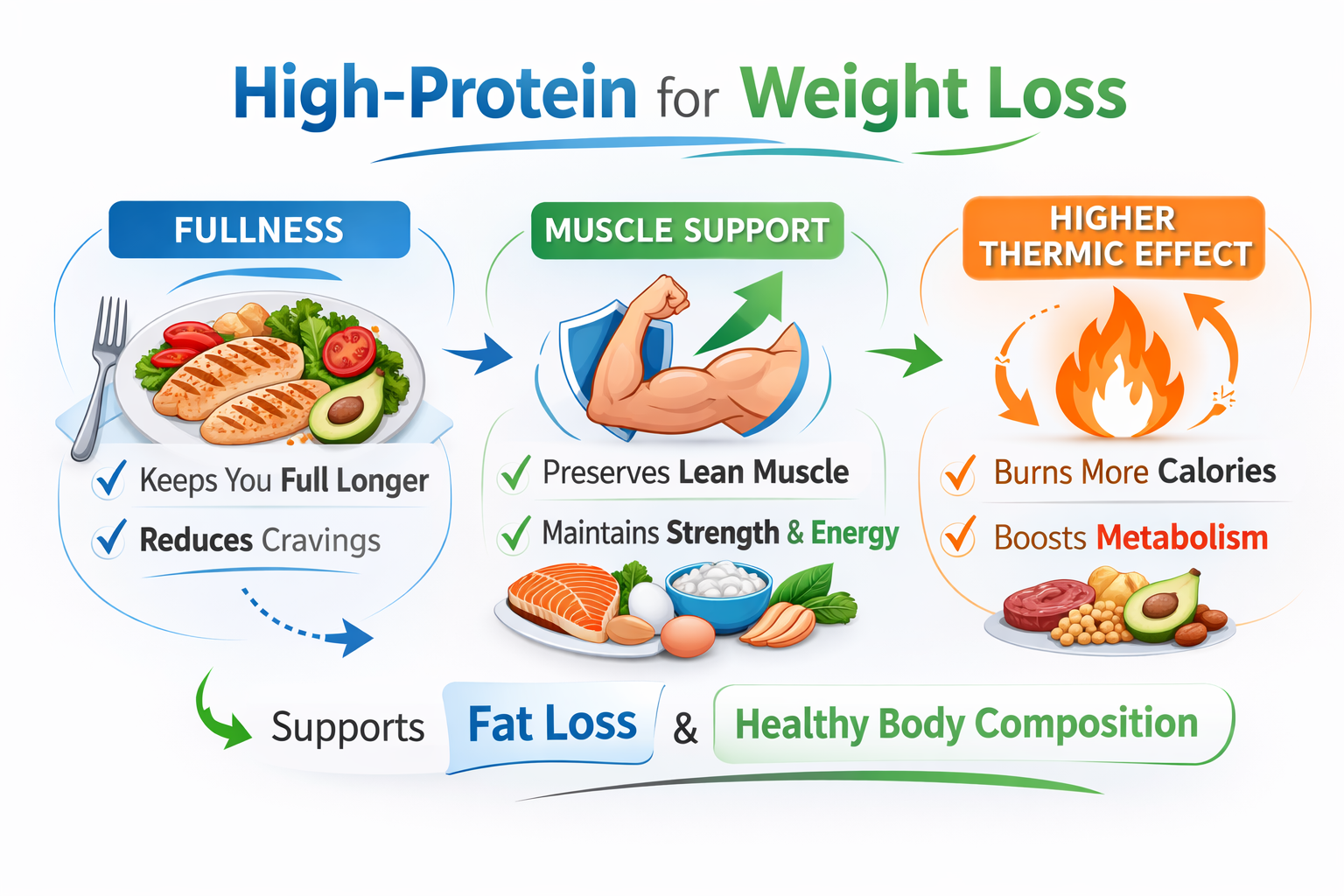
First, it helps with appetite. Higher-protein meals tend to increase fullness and reduce the urge to snack out of habit, which is one reason higher-protein approaches are commonly used for body-weight management.
Second, protein protects lean mass while you diet. When calories drop, your body can lose fat and muscle. Getting enough protein makes it easier to keep more lean tissue, which matters for strength, energy, and your “look” as the scale changes.
Third, protein costs more energy to digest than carbs or fat. That extra “processing” is called the thermic effect of food, and protein is typically higher (often cited around 20 to 30% of protein’s energy content).
Is a high protein diet good for weight loss?
For many adults, yes, especially when protein comes from whole-food sources (lean meats, seafood, eggs, dairy, beans, soy, and minimally processed options).
A few situations deserve extra caution:
✅ If you have kidney disease, high-protein eating may not be appropriate without medical guidance.
✅ If your “high protein” plan crowds out fiber-rich foods, you may feel more constipated or low-energy, and adherence usually drops.
✅ If you rely heavily on shakes and bars, total calories can quietly climb, even when protein looks great on paper.
If you are unsure where you fall, that is where a supervised approach helps. In a clinic setting, we can match protein targets to labs, medications, and your appetite patterns, not just a generic calculator.
How much protein do you need for fat loss?
Most evidence-based recommendations for higher-protein weight management land in a range around 1.2 to 1.6 g per kg per day, with many people also doing well when meals contain roughly 25 to 30 g of protein per meal.
Here are two practical ways to set your target:
Option A (most common): Pick a daily range based on body weight.
Option B (often easier): Aim for a per-meal minimum, then “top up” with a protein snack if needed.
Protein target table (simple ranges you can actually use)
| Body Weight | Daily Protein Range (1.2–1.6 g/kg) | Easy Per-Meal Target (3 meals) |
|---|---|---|
| 140 lb (64 kg) | 77–102 g/day | 25–35 g/meal |
| 170 lb (77 kg) | 92–123 g/day | 30–40 g/meal |
| 200 lb (91 kg) | 109–146 g/day | 35–50 g/meal |
| 230 lb (104 kg) | 125–166 g/day | 40–55 g/meal |
Source ranges reflect common higher-protein weight management guidance.
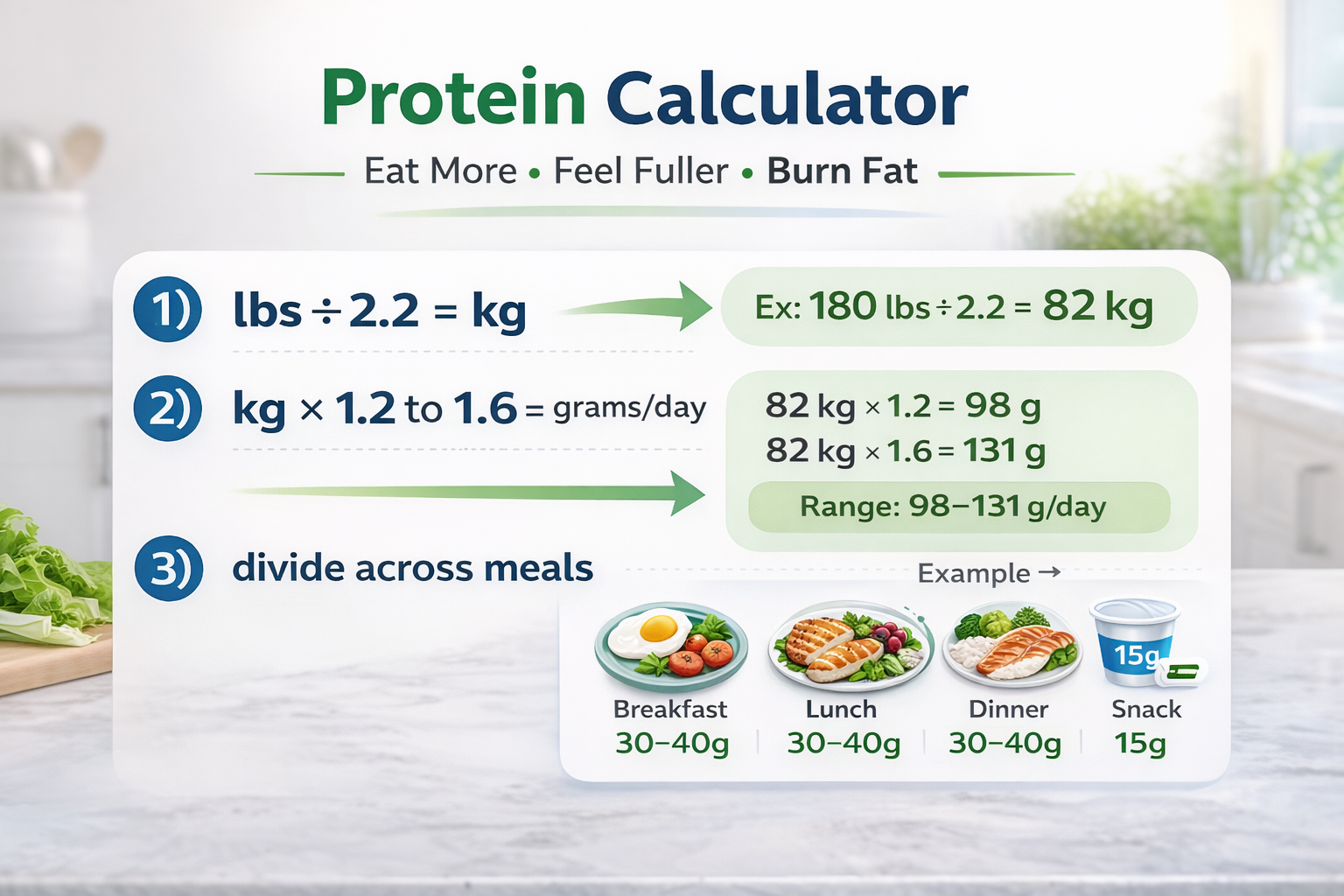
A 60-second way to calculate your number
-
Convert pounds to kilograms: lbs ÷ 2.2 = kg
-
Multiply by 1.2 and 1.6 to get a range
-
Divide your daily number across meals (and add a snack if dinner tends to be light)
Example: 180 lb ÷ 2.2 = 82 kg
82 × 1.2 = 98 g/day (lower end)
82 × 1.6 = 131 g/day (upper end)
What to eat on a high protein diet plan for weight loss
The best results usually come from pairing protein with high-volume foods (produce, soups, beans) and a reasonable calorie target. Protein helps you stick to your plan, but it still needs to live inside a sustainable deficit. People who lose weight steadily (about 1 to 2 pounds per week) are more likely to keep it off than those chasing rapid drops.
Instead of turning your diet into a spreadsheet, try this “plate rhythm”:
✅ Protein anchor: chicken, turkey, fish, eggs, Greek yogurt, cottage cheese, tofu, tempeh, beans, lentils
✅ Color and crunch: vegetables or fruit at most meals
✅ Smart carbs (optional): potatoes, rice, oats, whole grains, fruit, beans (portion based on your calorie target)
✅ Fats that help fullness: olive oil, avocado, nuts, seeds (measured, not poured)
If you want help turning this into a local routine you can follow, start here: weight loss diet in Greenville, NC.
Easy meal ideas and high protein diet for weight loss recipes (without spending all Sunday cooking)
You do not need complicated recipes. You need repeatable “modules” you can rotate.
The 30g breakfast you can repeat all week
Try a bowl of Greek yogurt + berries + a measured handful of granola, then add a side like 2 eggs if you need a higher target. This is fast, portable, and works for people who dislike heavy morning meals.
The “protein + bag salad” lunch that saves weekdays
Use a ready-to-eat salad kit, then add rotisserie chicken, tuna, salmon, or tofu. This keeps decision fatigue low, which matters more than perfection.
The dinner formula that feels normal
Pick one: grilled chicken, lean ground turkey, fish, or extra-lean beef.
Add a big vegetable portion (roasted, stir-fried, or steamed).
Finish with a carb portion that matches your deficit (rice, potatoes, beans), or skip it if you are already satisfied.
Two snack ideas that hit protein without “diet vibes”
-
Cottage cheese + pineapple (sweet, filling)
-
Edamame or jerky (savory, easy to pack)
Tip that helps in real life: if dinner is your hardest time (stress, kids, late meetings), “pre-load” protein earlier. A higher-protein lunch often reduces nighttime grazing.
7 day high protein diet plan for weight loss (simple, flexible, not fussy)
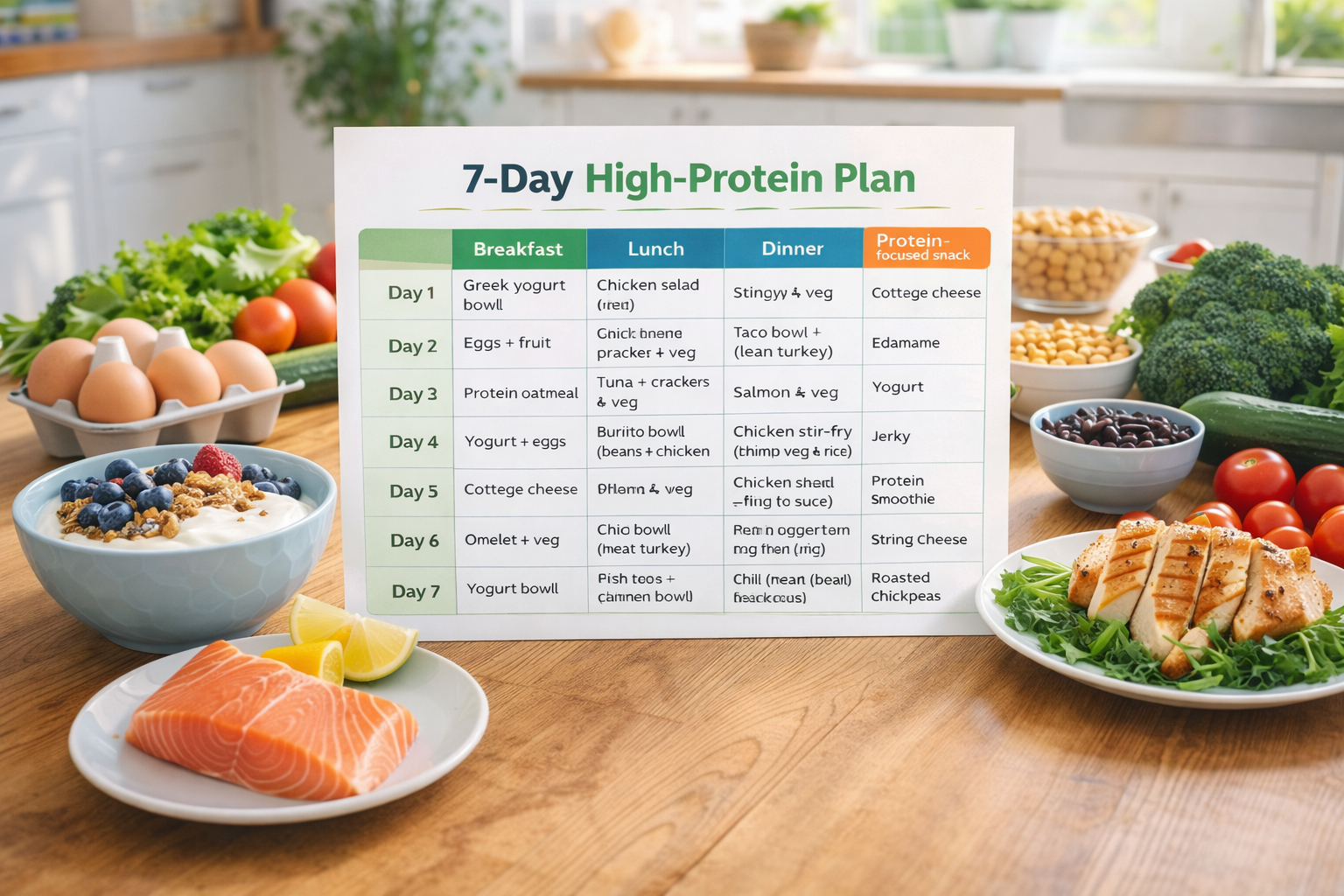
This is a framework, not a rigid menu. Swap foods within the same “slot” to match preferences and culture.
7-day sample (mix-and-match)
| Day | Breakfast | Lunch | Dinner | Protein-focused snack |
|---|---|---|---|---|
| 1 | Greek yogurt bowl | Chicken salad kit | Salmon + veg | Cottage cheese |
| 2 | Eggs + fruit | Turkey wrap | Taco bowl (lean turkey) | Edamame |
| 3 | Protein oatmeal | Tuna + crackers + veg | Chicken stir-fry | Yogurt |
| 4 | Yogurt + eggs | Leftovers | Shrimp + veg + rice | Jerky |
| 5 | Cottage cheese bowl | Burrito bowl (beans + chicken) | Lean burger bowl | Protein smoothie |
| 6 | Omelet + veg | Salad + tofu | Chili (lean meat/beans) | String cheese |
| 7 | Yogurt bowl | Rotisserie chicken plate | Fish tacos (light sauce) | Roasted chickpeas |
If you want this plan adjusted for appetite meds, menopause, insulin resistance, or a busy work schedule, it is worth doing with guidance. The goal is consistency you can keep.
Common mistakes that slow results (even with “good” macros)
✅ Protein is high, but calories are higher. Oils, nuts, dressings, and “healthy snacks” add up fast.
✅ Weekdays are solid, weekends erase the deficit. A few restaurant meals can wipe out five careful days.
✅ Too little fiber. You feel hungry and your digestion complains, which makes you quit.
✅ All protein, no plan. If every meal is a different experiment, you burn out.
✅ Expecting rapid change. A safe, sustainable rate is usually slower than social media suggests.
Which option is best for you (DIY vs guided vs medical)
The “best” option depends on your history and what keeps you consistent.
DIY (best if you are generally healthy and organized):
You track protein, keep a moderate calorie deficit, and repeat simple meals. This works well if you do not have major hunger swings and you have time to plan.
Guided nutrition support (best if you start strong, then stall):
If you lose a few pounds then plateau, coaching can help you adjust portions, eating timing, and adherence without cutting everything you enjoy.
Medical weight loss support (best if hunger, hormones, or health issues are in the way):
If you have significant metabolic barriers, frequent regain, or you need closer monitoring, supervised care can combine nutrition strategy with medical options in a safer, more personalized way.
If you are in Greenville, Winterville, Ayden, Farmville, or Pitt County and want a plan built around your labs, lifestyle, and appetite patterns, you can request a consultation.
Practical wrap-up you can start today
If your goal is steady fat loss, build your day around protein anchors, keep calories in a realistic deficit, and repeat meals you actually enjoy. high protein diet for weight loss works best when it is sustainable, food-forward, and tailored to your health, not when it is extreme.
Frequently Asked Questions
Can you still lose weight on a high-protein diet?
Yes. The key is still a calorie deficit, and higher protein can make that deficit easier to maintain by improving fullness and helping preserve lean mass while you diet. If you raise protein but keep adding calorie-dense extras (oils, nuts, large portions of cheese), weight loss can stall. For most people, the sweet spot is a clear protein target plus simple portion structure, so the plan feels livable on normal weekdays and weekends.
How much protein a day to lose 20 pounds?
There is not one magic number, because protein needs depend on your body weight, your calorie deficit, and how active you are. A common evidence-based range for weight management is roughly 1.2 to 1.6 g per kg per day, often paired with about 25 to 30 g per meal as a practical minimum. If you want to lose 20 pounds, focus on a weekly routine you can keep for months, not a short burst that leads to rebound.
What is the 90 30 50 method?
The 90 30 50 method is a daily target approach that typically means 90 grams of protein, 30 grams of fiber, and 50 grams of fat. People like it because it simplifies decisions without strict calorie counting. The limitation is that one set of numbers may not fit everyone, especially if you are smaller, larger, very active, or managing medical conditions. If you try it, treat it as a starting template, then adjust portions based on results and how you feel.
How to lose 20 lbs in a month?
For most people, losing 20 pounds in a month is not a safe or realistic fat-loss goal. Public health guidance commonly points to a steadier pace, around 1 to 2 pounds per week, which is more likely to be maintained. Rapid drops are often a mix of water loss and aggressive restriction, which can increase fatigue, muscle loss risk, and rebound eating. If you believe you need faster loss for a medical reason, do it with clinician supervision rather than extreme dieting.
How did Kelly Clarkson lose weight so quickly?
Publicly, she has attributed her weight loss to health changes and has also said she used prescription medication. The important takeaway is that celebrity timelines do not tell you what is safe or appropriate for your body, labs, and medical history. If you are considering medication, the safest route is a medical evaluation and a plan that pairs any treatment with nutrition habits you can keep long term.
Which body part loses fat first?
You cannot choose where fat comes off first, and “spot reduction” is largely a myth. Where you notice changes first depends on genetics, hormones, and sex differences in typical fat storage patterns. Many people see early changes in the face or midsection, but others notice hips and thighs later. The most reliable strategy is overall fat loss paired with strength training, so your shape improves even while the scale moves slowly.