

Weight-Loss Tips That Actually Work: 12 Clinician-Friendly Habits
These weight loss tips are built around the same basics clinicians use, steady calories, higher protein, consistent movement, and habits you can repeat in real life. If you want results that last in Greenville, Winterville, Ayden, Farmville, or anywhere in Pitt County, focus on the simple systems below, not extreme rules.
You do not need a “perfect” week to get traction. You need a plan that reduces decision fatigue and makes the next right choice easy, even on busy days.

Quick answer: what usually moves the scale first (without crash dieting)
Most beginners see the fastest, safest momentum when they do three things consistently:
✅ Eat fewer “invisible calories” (drinks, oils, snacks)
✅ Anchor meals with protein and fiber so cravings calm down
✅ Keep daily movement predictable, even if workouts are short
If your progress stalls for a few weeks, that is common. Many stalls are “trend flat” periods that need small adjustments, not harsher restriction.
Quick-start table: 12 habits at a glance (busy-life friendly)
| Habit | Why it works | Easy start this week |
|---|---|---|
| 1) Protein-first breakfast | Reduces mid-morning hunger and snacky cravings | Add a clear protein item (eggs, yogurt, cottage cheese) |
| 2) Build a “plate formula” at lunch | Makes portions consistent without tracking everything | Protein + produce + smart carb (optional) |
| 3) Measure calorie-dense add-ons | Oils, nuts, dressings can erase a deficit fast | Use a spoon once per day (not free-pour) |
| 4) Pick one “default” snack | Prevents the 4 pm drive-thru spiral | Protein + fiber (Greek yogurt + fruit) |
| 5) Walk after one meal | Improves consistency and keeps daily burn from dropping | 10 minutes after lunch or dinner |
| 6) Strength train twice weekly | Protects muscle, improves body composition | 2 short sessions, 20 minutes each |
| 7) Use a 7-day trend, not one weigh-in | Reduces panic and improves decisions | Weigh daily, compare weekly averages |
| 8) Plan weekends like adults (not robots) | Weekend calories commonly erase weekday wins | Choose 1 planned treat, not “all day grazing” |
| 9) Fix sleep timing (even before perfect sleep) | Poor sleep increases hunger and cravings | Set a consistent “screens off” time |
| 10) Create a “stress eating pause” | Helps you notice urges before reacting | 60 seconds: water + breathe + decide |
| 11) Hydrate with intention | Liquid calories and low hydration confuse hunger | Water with each meal, limit sugary drinks |
| 12) Review and adjust every 14 days | Keeps you from spinning your wheels | Change one lever, not everything |
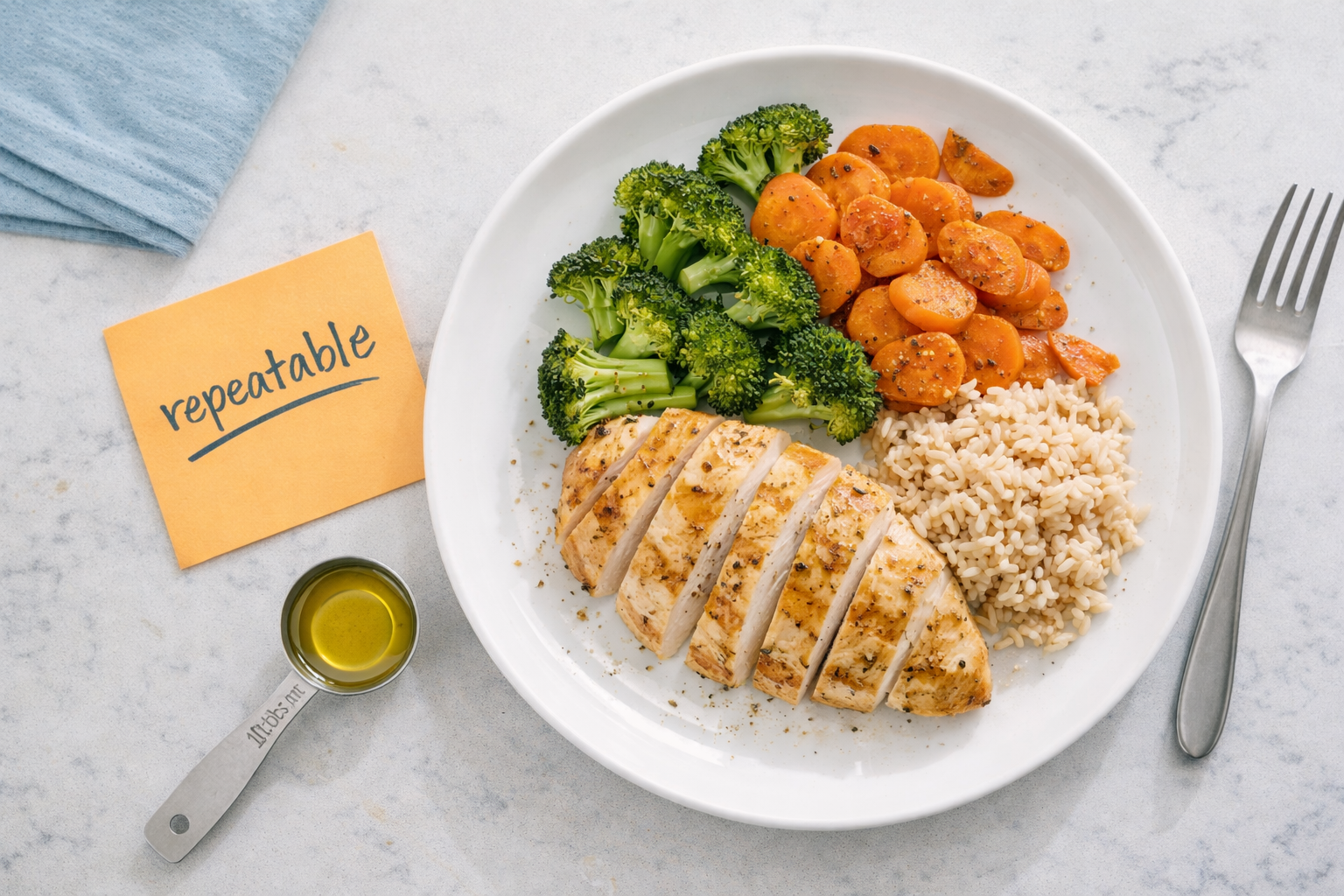
1) Protein-first breakfast (not a perfect breakfast)
Why it works: When breakfast has real protein, many people feel steadier energy and fewer cravings later. That matters in real life because most overeating is not about dinner, it is about the entire day building up to dinner.
How to do it in Greenville mornings: Pick a repeatable option you can make in 5 minutes. Examples: Greek yogurt + berries, eggs + fruit, cottage cheese + pineapple, or a protein smoothie that is not loaded with extras. If you prefer guidance, East Carolina Weight Loss also shares practical protein targets and meal ideas you can adapt to your schedule.
2) Use a “plate formula” at lunch so you stop guessing
Why it works: Lunch is where people either stay on track or start the snack spiral. A simple plate structure helps you stay satisfied without turning food into math.
How to do it this week: Build lunch with three parts: (1) a protein anchor, (2) a big produce portion, and (3) a carb portion only if it helps you feel satisfied and prevents later cravings. This works especially well for people who work long shifts, drive between Winterville and Greenville, or have meetings stacked all afternoon.
3) Measure calorie-dense add-ons once per day
Why it works: Many stalls are not about “bad food.” They are about small extras that add up, cooking oil, creamy dressings, nuts, cheese bites, and sweet coffee drinks.
How to do it without obsessing: Choose one item you will measure daily for 14 days. Pick the one you use most (oil, creamer, peanut butter, dressing). Keep everything else normal. This single change often reveals where the real calories are coming from, without making you feel deprived.
4) Choose one default snack that actually holds you
Why it works: Most “snacks” are just fast carbs that leave you hungrier an hour later. A better snack prevents late-day overeating.
How to do it: Pick one option you can repeat 5 days a week. Keep it simple: protein + fiber. Examples: Greek yogurt + fruit, jerky + an apple, cottage cheese + berries, edamame, or a protein bar you truly like. If you are a woman dealing with cycle-related hunger swings, this habit alone can reduce the “I was good all day, then lost it at night” pattern.
5) Walk after one meal (make movement automatic)
Why it works: Daily movement protects your calorie burn from quietly dropping, especially when you diet. It also helps stress, which is a major driver of cravings.
How to do it in Pitt County life: Tie a short walk to something that already happens. After dinner, walk the neighborhood. After lunch, walk the parking lot at work. If you are starting from zero, begin with 10 minutes. You can build from there, but consistency is the win.
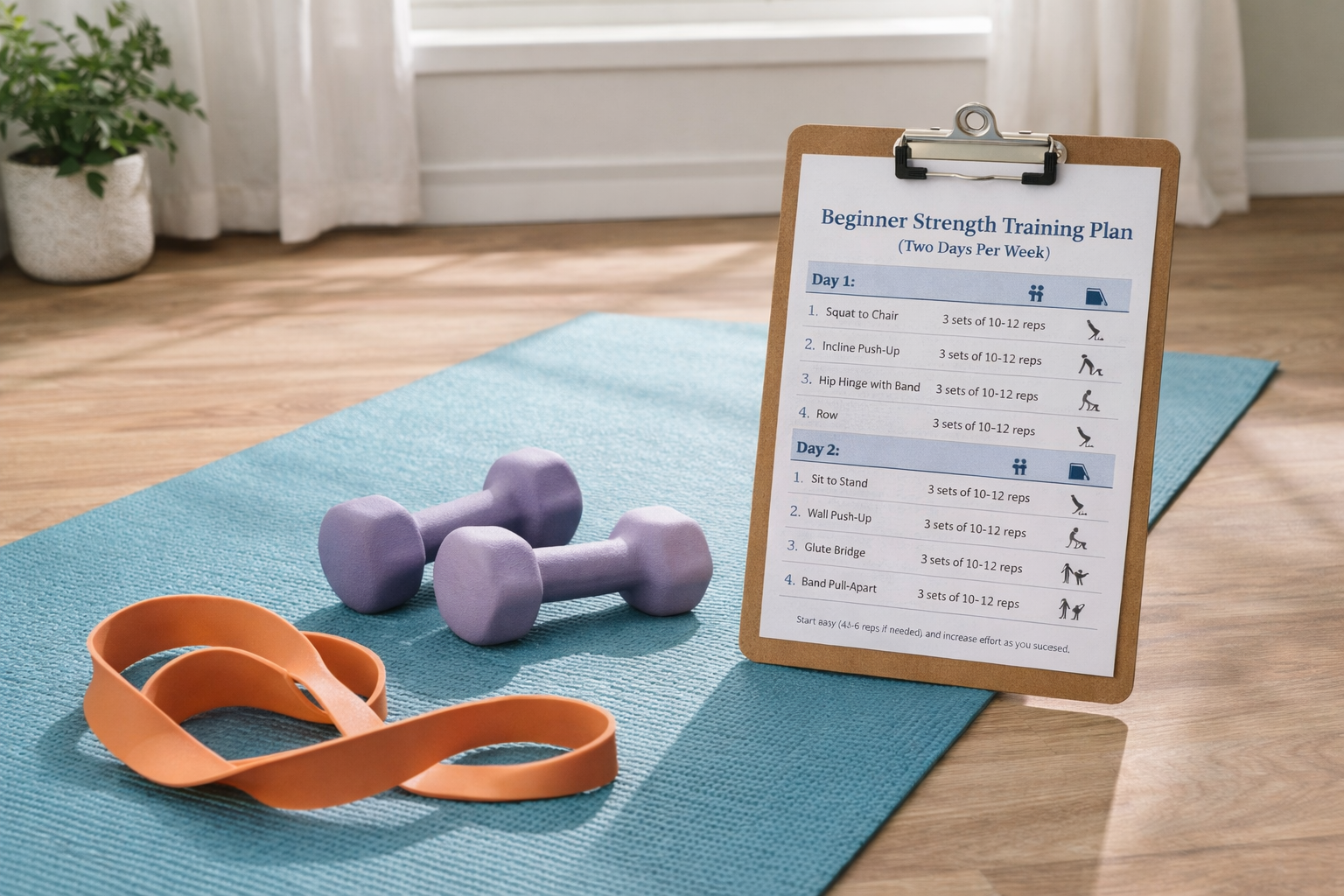
6) Strength train twice per week (beginner-friendly)
Why it works: Strength training helps protect lean mass while you lose fat, which supports better body composition and a stronger “look” even when the scale moves slowly.
How to do it without a gym: Two short sessions per week is enough to start. Use bodyweight moves (squats to a chair, wall push-ups, hip hinges, rows with a band). The goal is not soreness. The goal is repeatable effort that slowly progresses. If you already walk a lot, strength work is often the missing piece.
7) Track a 7-day trend, not daily emotions
Why it works: Water shifts can hide fat loss, and daily weigh-ins can create panic. Using a weekly average makes your next decision calmer and smarter.
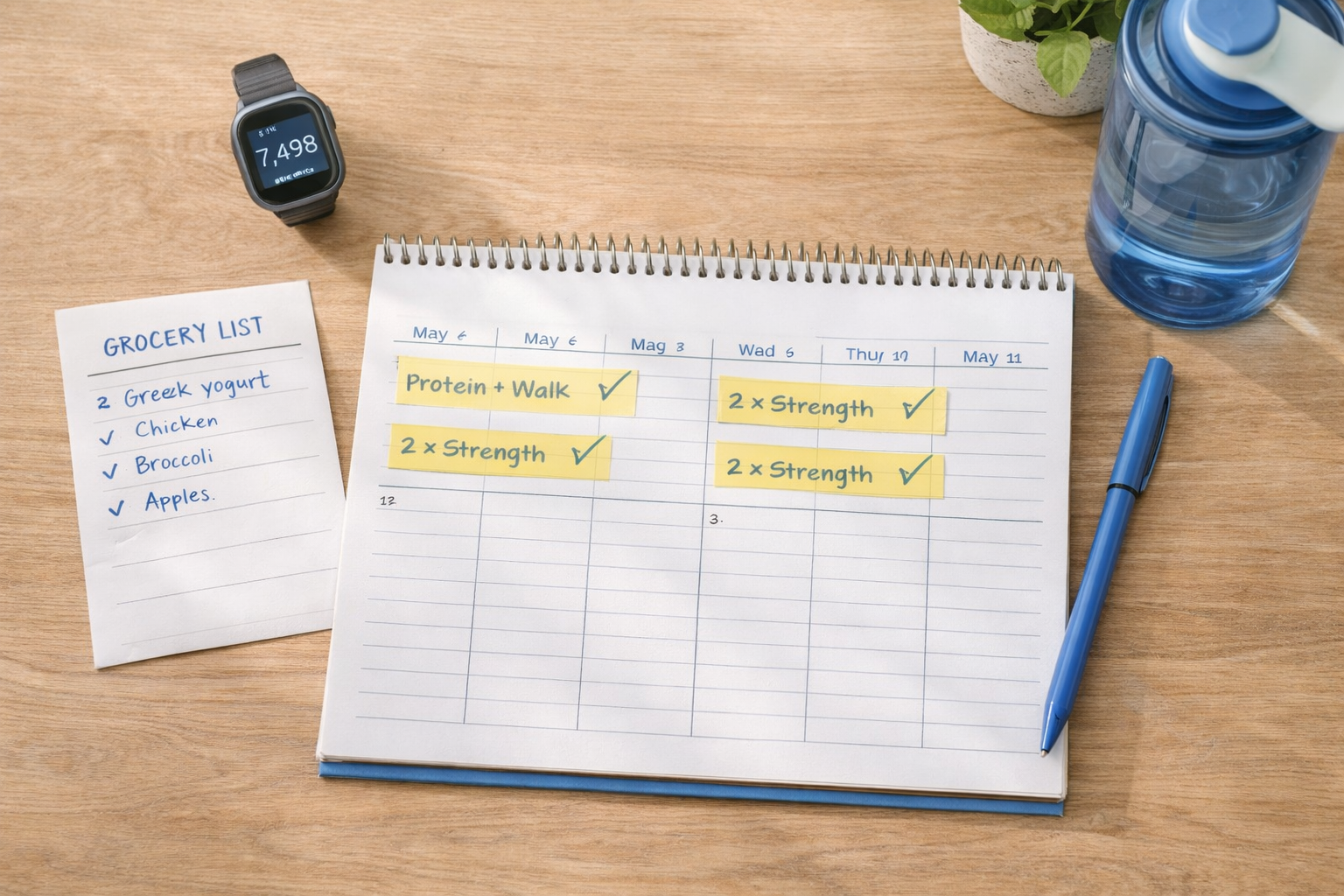
How to do it: Weigh at the same time each morning, then compare weekly averages. If the trend is flat for about 2 to 4 weeks and you have been consistent, treat it as feedback and adjust one lever.
Helpful internal link (plateau support):
Behavior & Mindset for a Weight Loss Plateau
Weight Loss Plateau: Why It Happens + Proven Ways to Break Through
8) Plan weekends like a normal person (not an “all or nothing” dieter)
Why it works: A few high-calorie meals can erase five disciplined weekdays. This is one of the most common reasons people feel “stuck” even when they are trying hard.
How to do it: Decide in advance what you are choosing, not what you are “avoiding.” Pick one planned treat meal and one planned treat item. Keep protein consistent earlier in the day. If you go out in Greenville, aim to order protein first, then pick sides that help fullness. You can enjoy food and still stay in a weekly deficit.
9) Fix sleep timing first (even if sleep is not perfect yet)
Why it works: Poor sleep increases hunger and makes cravings louder. It also lowers the odds you move as much the next day.
How to do it: Choose a consistent wake time most days. Then create a simple wind-down cue, dim lights, screens off, or a short shower. You do not need a perfect bedtime routine. You need a repeatable one. This habit is especially important for parents, shift workers, and anyone whose evenings are stressful.
10) Use a “stress eating pause” that takes 60 seconds
Why it works: Stress eating often happens fast. A short pause gives your brain time to notice what is happening and choose intentionally.
How to do it: When you feel the urge to snack, do this: drink water, take 5 slow breaths, then ask, “Am I hungry, tired, stressed, or bored?” If you are hungry, eat a planned snack. If you are stressed, try a short walk, a quick stretch, or a two-minute reset. The win is awareness, not perfection.
11) Hydrate with intention and watch liquid calories
Why it works: Sweet drinks and fancy coffee can add significant calories without making you feel full. Low hydration can also feel like hunger.
How to do it: Start with water at each meal. If you want flavored drinks, choose low-calorie versions. If you love coffee, keep the add-ons measured (cream, syrups). This is one of the easiest places to “find calories” without touching your main meals.
12) Review every 14 days and change one lever at a time
Why it works: People stall because they either never adjust, or they change everything at once and cannot tell what worked.
How to do it: Every two weeks, review (1) weekly weight trend, (2) waist or how clothes fit, (3) protein consistency, (4) steps, (5) sleep. Then pick one change. If you need a clearer calorie target, a structured deficit is often the simplest next step.
Helpful internal link (calorie target):
How Many Calories to Lose Weight? A Simple Guide
High-Protein Diet for Weight Loss: How Much You Need + Easy Meal Ideas
Table: which option is best for you (DIY vs coaching vs clinic support)
| Option | Best for | Why it works | What to do next |
|---|---|---|---|
| DIY habit plan | You are generally healthy and consistent | Simple structure + weekly review creates steady progress | Run the 12 habits table for 14 days |
| Coaching support | You start strong, then stall or stress eat | Accountability solves real-life friction and keeps you from overcorrecting | Request a consultation and bring your schedule |
| Clinic-based program | Complex history, frequent regain, or you want monitoring | More structure, clearer tracking, and guided adjustments | Book an evaluation to match a plan to your needs |
Which is “best” most often? If you have tried multiple rounds of dieting and keep rebounding, coaching or clinic support tends to be the most practical choice because it reduces guesswork and helps you adjust before frustration leads to quitting. If you are in Greenville or nearby towns, a consult can quickly confirm what is appropriate and safe for you.
Gentle next steps (Greenville, Winterville, Ayden, Farmville, Pitt County) 📍
-
Pick three habits from the table above and run them for 14 days. ✅
-
If you hit a stall, do not slash calories immediately. Check your trend, sleep, steps, and the “invisible calories” first.
-
If you want a plan built around your body, lifestyle, and history, request support.
Medical disclaimer
This article is for educational purposes only and is not medical advice. It does not diagnose, treat, cure, or prevent any disease. Results vary by individual. Talk with a qualified healthcare professional before starting a new nutrition or exercise plan, especially if you are pregnant, postpartum, taking medications, or managing a medical condition.
Wrap-up: a simple plan you can repeat
If you want weight loss tips that feel doable, choose repeatable meals, predictable movement, and a two-week review cycle so you always know what to adjust next. For many people in Greenville and Pitt County, the biggest breakthrough is not a new trick, it is finally having a simple plan they can follow on busy weekdays and imperfect weekends.
Frequently Asked Questions
How do I drop 20 pounds fast?
The safest “fast” approach is steady, not extreme. Many people can lose weight more quickly at the beginning, but very aggressive restriction often backfires through fatigue, cravings, and rebound eating. A better strategy is to set a realistic calorie target, keep protein consistent, and build daily movement you can repeat. If you need faster loss for a health reason, do it with clinician guidance so you protect energy, sleep, and lean mass while you reduce body fat.
How to lose 70 pounds in 6 months?
It can be possible for some people, but it requires structure and medical safety checks. The bigger the goal, the more important it is to focus on weekly habits, not daily scale swings. Build a clear calorie deficit, keep protein high, strength train to protect muscle, and plan weekends so you do not erase progress. For a large goal, it is smart to get support early, especially if you have health conditions, medications, or a history of regain.
How to realistically lose weight?
Realistic weight loss is the plan you can keep doing when life gets busy. Most people succeed when they stop chasing novelty and start repeating a few high-impact habits: consistent meals, fewer liquid calories, daily steps, and a weekly progress review. If you are a woman juggling stress, sleep changes, or hormonal shifts, structure matters even more. Start with small wins that stack, then adjust one lever every two weeks based on trend data.
What is the best way to kick start weight loss?
The best “kick start” is clarity, not intensity. Begin by tightening the easiest leaks: measure calorie-dense add-ons, clean up drinks, and add a protein anchor to breakfast and lunch. Pair that with one simple movement habit like a 10-minute walk after dinner. You will usually feel better quickly, which improves follow-through. If you want faster clarity, track honestly for a few days so you can see what is really happening, not what you hope is happening.
What is the 7 second morning trick for weight loss?
There is no proven 7-second trick that melts fat, but there is a better morning reset. Most viral “tricks” are just reminders to be consistent. If mornings are your weak spot, use a simple cue: drink water, eat a protein-forward breakfast, and do a short walk or light movement. That combination improves fullness and makes activity automatic, which matters more than perfect timing. If you like routines, focus on repeatability, not magic.
What drinks help burn belly fat?
No drink spot-reduces belly fat, but drink choices can make a deficit easier. The biggest win is removing sugary beverages and high-calorie coffee add-ons that do not keep you full. Water, unsweetened tea, black coffee (or lightly creamed coffee), and zero-calorie flavored waters are practical options. If you want something “functional,” a high-protein shake can help reduce hunger, but it still has calories, so use it as a planned snack, not an extra.