
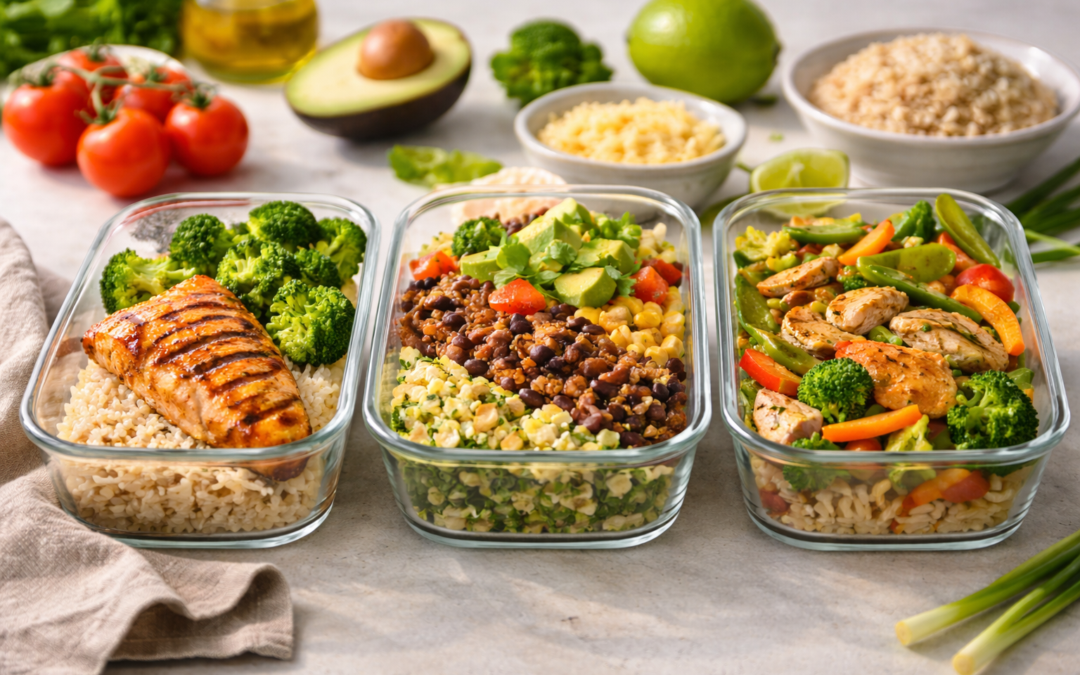
How to Set Your Daily Calories for Fat Loss (Greenville, NC Guide)
Calorie deficit for weight loss works when your average intake stays below what your body burns, while still eating enough protein and whole foods to feel satisfied. In practice, most people do best with a moderate deficit, a protein-forward routine, and dinners they can repeat in a busy week in Greenville, Winterville, Ayden, Farmville, and across Pitt County.
Medical disclaimer: This content is for educational purposes only and is not medical advice. Individual needs vary. If you have a medical condition, take medications, or have a history of disordered eating, talk with a qualified clinician before changing your diet.
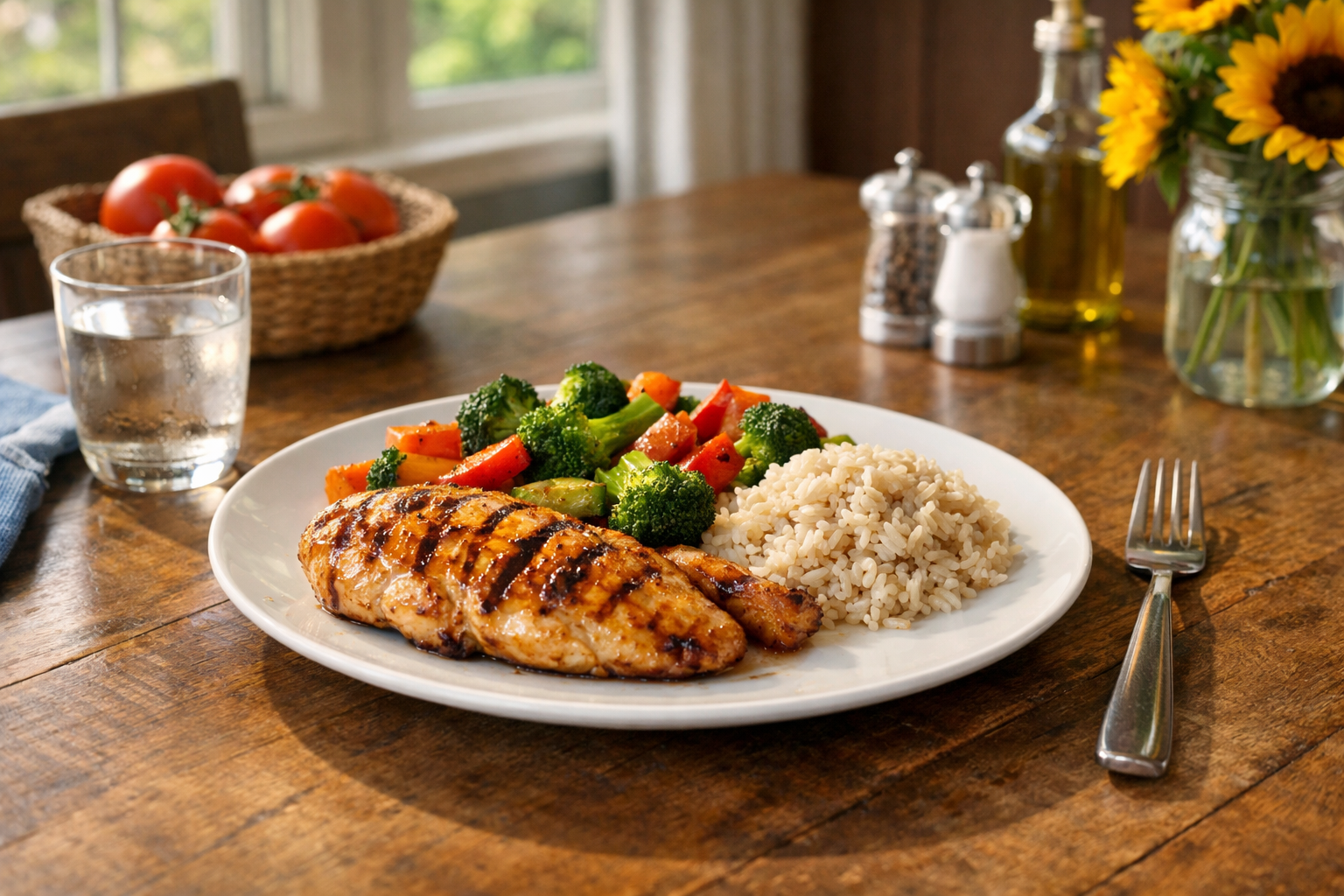
If you want a plan that is personalized (instead of guessing), you can get a diet plan consult here: Schedule an Appointment
You can also see how the program works (what to expect, process, support): How it Works
What a calorie deficit actually means (without the confusing math)
A calorie deficit simply means your body uses more energy than it takes in. Your body then covers the “gap” by pulling energy from stored fuel, including body fat (and sometimes muscle if protein is low or strength training is missing).
The simplest way to think about it
If your maintenance calories (what you burn) are around 2,100 per day and you eat an average of 1,700, you are in a 400-calorie daily deficit on average. Over time, that adds up.
The key phrase is on average. One “perfect” day does not matter as much as your 7-day pattern. That is why people feel stuck when weekdays are tight but weekends drift.
Why the scale can lie week to week
Even when fat loss is happening, scale weight can bounce because of:
-
Water retention from salty meals
-
Higher carbs (glycogen holds water)
-
Stress and poor sleep
-
Hard workouts (temporary inflammation)
-
Constipation or digestion changes
A better signal is trend weight (7-day average), measurements, how clothes fit, and progress photos.
If you want a more data-driven approach, a body composition scan can help separate fat loss from muscle changes, which is especially useful during plateaus: Body Composition Scan Greenville, NC
How many calories to lose weight (set your target in about 10 minutes)
If you have ever asked how many calories to lose weight, the most reliable starting point is:
-
estimate maintenance, 2) choose a reasonable deficit, 3) monitor and adjust.
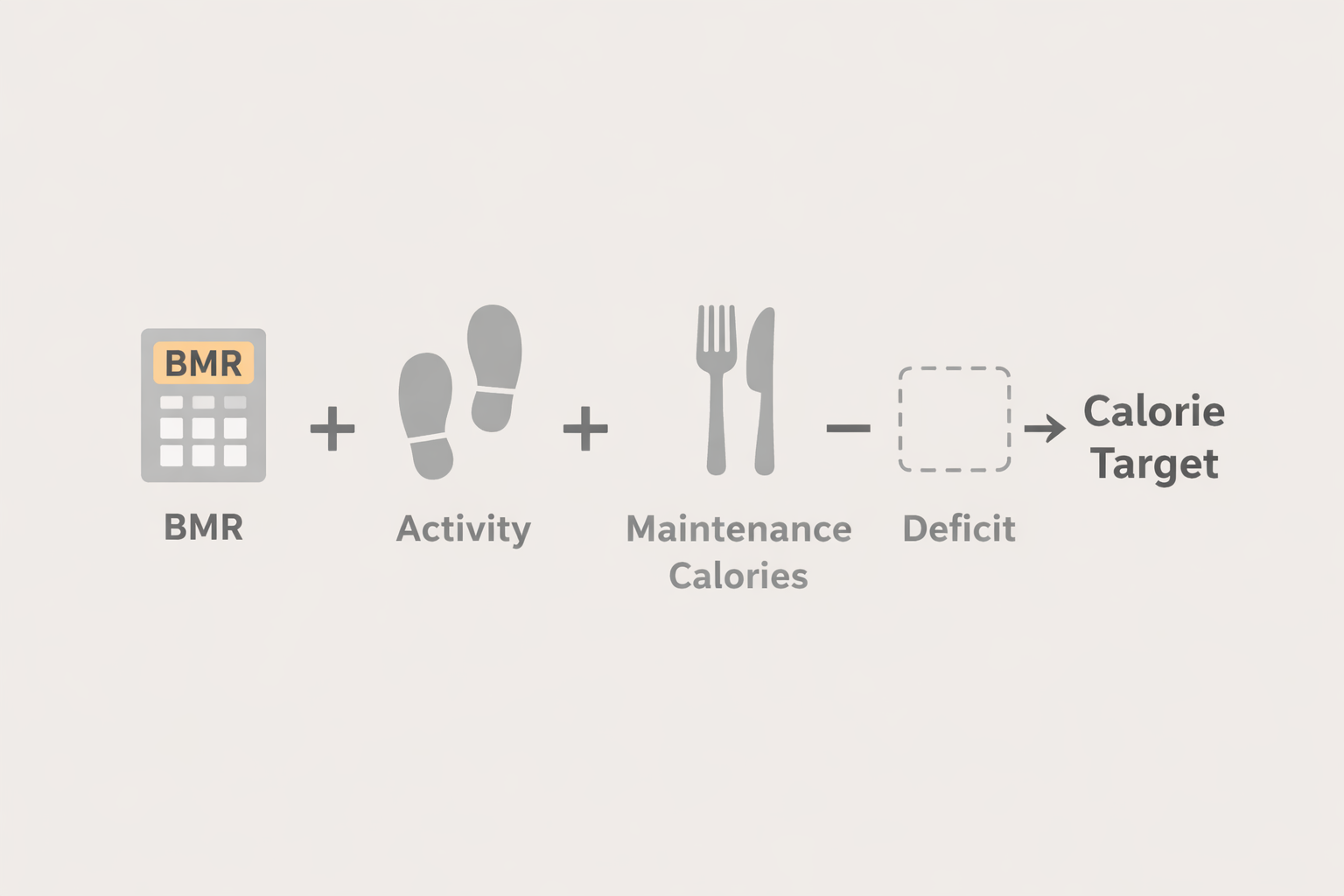
Step 1: Estimate maintenance calories (TDEE)
TDEE stands for Total Daily Energy Expenditure. It is your BMR (resting burn) plus activity.
A practical way to estimate:
-
BMR (Mifflin-St Jeor is commonly used)
-
Multiply by an activity factor (sedentary vs active)
You do not need perfection. You need a starting point you can adjust.
Step 2: Choose a safe deficit you can actually maintain
Many guides use a 500–1,000 calorie per day deficit as a general range, which often lines up with about 1–2 pounds per week for some people, depending on starting size and consistency.
That said, the best deficit is the one you can hold without feeling miserable, skipping social events, or triggering binge-restrict cycles.
Step 3: Track the right way (so your deficit is real)
Most “I’m barely eating” stalls come from one of these:
-
Portions drifting bigger than you think (cooking oils, sauces, nuts, “healthy snacks”)
-
Liquid calories (sweet coffee, juice, alcohol)
-
Weekend calories erasing weekday deficits
-
Underestimating restaurant meals (even “healthy” ones)
You can track in an app, use hand portions, or use a plate method. If tracking feels overwhelming, this post on apps and tools may help you pick a simple setup: Best Weight Loss Apps
Quick deficit calculator you can do today (no fancy tools)
Use this simple process:
✅ 1) Write your best maintenance estimate (TDEE).
✅ 2) Subtract 300–500 calories/day to start (most people tolerate this well).
✅ 3) Hold it for 14 days, then adjust based on your trend.
Example (real-life Greenville schedule):
-
Maintenance estimate: 2,200 calories/day
-
Start deficit: 400 calories/day
-
Target: ~1,800 calories/day average
-
If your 14-day trend is not moving, you adjust by ~100–150 calories or increase steps.
This approach is calmer than chasing perfection and usually works better for busy adults juggling work, kids, and travel between Greenville and the surrounding Pitt County towns.
Why a higher-protein approach makes fat loss easier
A high protein diet for weight loss is not magic, but it often makes your deficit feel easier because protein supports fullness and helps protect lean mass when you are eating less.
A practical protein target you can remember
A simple range many coaches use for fat loss phases is roughly:
-
0.7 to 1.0 grams of protein per pound of goal body weight, depending on your preferences, training, and medical needs.
If that sounds like a lot, you do not need to jump there overnight. Start by adding protein to breakfast and lunch first, because dinner is usually where most people already do okay.
The “protein-forward plate” (simple and repeatable)
Instead of counting every gram, build most meals like this:
-
1 palm (or more) of lean protein
-
1–2 fists of veggies
-
1 cupped hand of carbs (adjust up/down based on progress)
-
1 thumb of fats
This is also why structured coaching can help. Many clinics set personal targets using data like BMR from a scan, then help you keep meals realistic instead of extreme.
Weight loss dinner ideas you can rotate (without cooking every night)
Let’s make weight loss dinner ideas practical: dinners should be filling, protein-forward, and easy to repeat. The best “diet dinner” is the one you will actually make on a Tuesday.
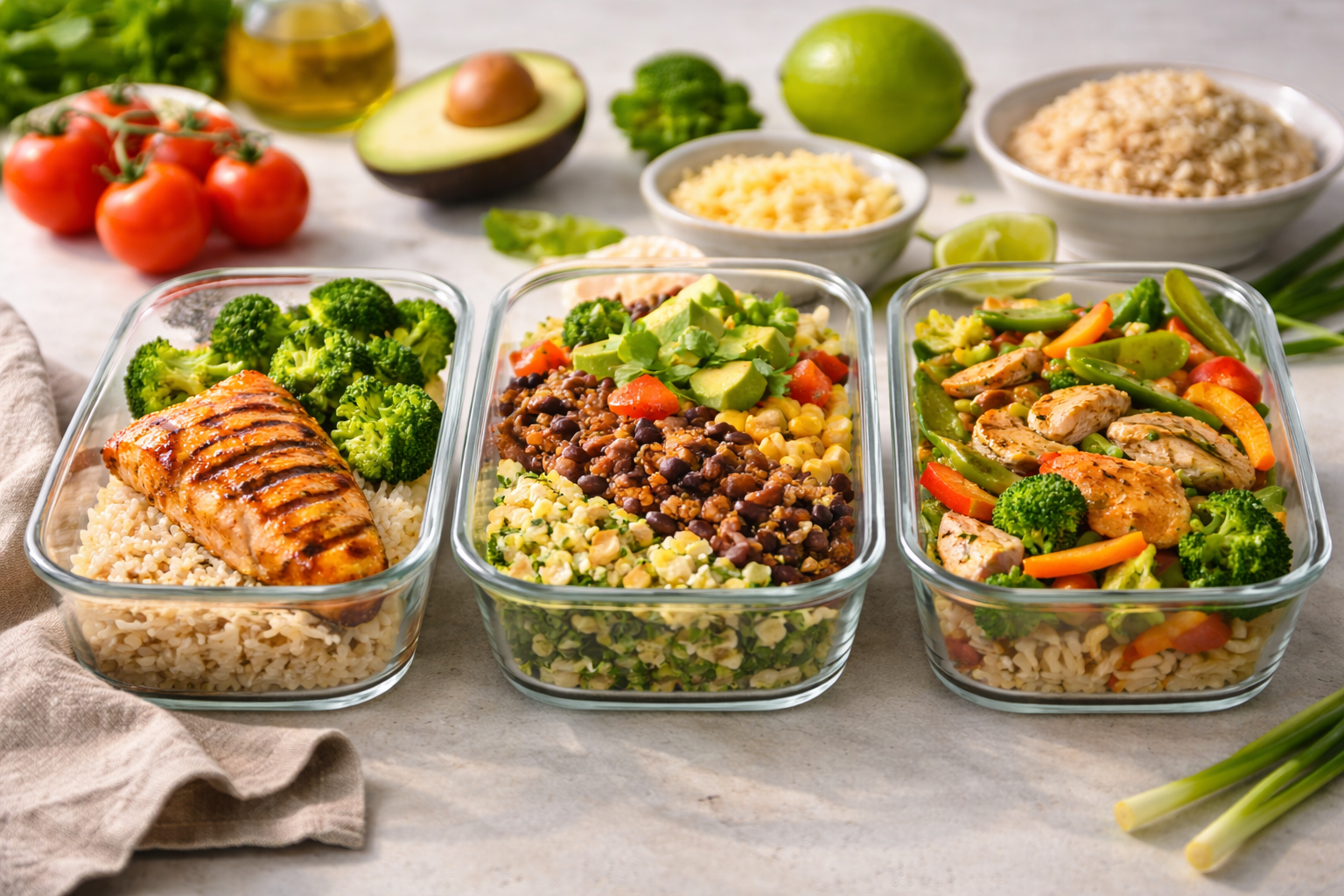
Quick dinner table (calories and protein are estimates)
Table 1: Simple high-protein dinners you can repeat
| Dinner (repeatable) | Approx Calories | Approx Protein | Why it works |
|---|---|---|---|
| Rotisserie chicken salad kit + extra Greek yogurt ranch | 450–550 | 40–55g | Fast, high protein, low effort |
| Turkey taco bowls (lean turkey, salsa, veggies, small rice) | 500–650 | 35–50g | Easy portions, high volume |
| Air fryer salmon + microwave rice + steamed broccoli | 550–700 | 35–45g | Balanced, satisfying fats |
| Chili (lean beef or turkey) + side salad | 450–650 | 35–50g | Batch cook, great leftovers |
| Stir-fry (chicken/shrimp) + frozen veggies + light sauce | 450–650 | 35–55g | Protein + fiber, quick |
| Eggs + egg whites scramble + fruit + toast | 400–550 | 30–45g | Cheap, fast, flexible |
The restaurant “swap” strategy (Greenville and beyond)
When eating out, you do not need the perfect order. You need one or two consistent swaps:
-
Choose grilled/roasted protein as the anchor
-
Ask for sauce on the side
-
Pick one carb (fries or bread or dessert, not all three)
-
Add a veggie or side salad
-
If portions are huge, box half immediately
This keeps your weekly average on track, even with date nights or weekends.
The most common reasons people stall (even on “low calories”)
If you feel like you are doing everything right, these are the usual culprits:
✅ Hidden calories (oils, dressings, snacks, bites, alcohol)
✅ Inconsistent weekends (two high days can erase five moderate days)
✅ Too little protein (hunger rises, muscle loss risk rises)
✅ Low movement outside workouts (steps matter more than people think)
✅ Poor sleep and stress (cravings increase, water retention increases)
✅ Deficit too aggressive (you burn out, then rebound)
A surprising fix for many people is not “eating less.” It is tightening up consistency and increasing protein and steps so the deficit is easier to hold.
For a simple meal framework, this meal plan-style post can help you build dinners and snacks that reduce cravings: Why A Proper Diet Plan Asks To Avoid Junk Food For Losing Weight
Which approach is best: tracking, plate method, or coaching?
Here is the honest answer: the best option depends on your history, personality, and how busy life is right now.
Table 2: Pick the approach you can follow for 8–12 weeks
| Approach | Best for | Watch-outs | Best “upgrade” |
|---|---|---|---|
| App tracking | Data-driven people, steady routines | Can feel tedious, easy to quit | Track only protein + dinner |
| Plate method | Busy schedules, low stress | Portions can drift | Add a weekly check-in + photos |
| Coaching | Plateaus, accountability needs, complex history | Needs follow-through | Pair with body scan + targets |
If you have tried multiple times and keep looping, coaching can reduce guesswork and help you adjust faster when progress slows. That is one reason many people start with a consult and a scan, then build targets that fit their actual life.
Next steps (simple, realistic, and local)
If you want a realistic plan you can follow in Greenville, Winterville, Ayden, Farmville, or anywhere in Pitt County:
-
Pick a starting calorie target you can maintain
-
Raise protein and lock in repeatable dinners
-
Build a weekly routine you can repeat even when life gets busy
If you want help dialing this in with personal targets and accountability, get a diet plan consult here: Schedule an Appointment

Wrap-up: sustainable fat loss beats extreme dieting
You do not need to starve, detox, or chase viral hacks to make progress. When you set the right target, prioritize protein, and build repeatable dinners, progress usually becomes calmer and more consistent. Calorie deficit for weight loss is most effective when it is moderate, realistic, and supported by habits you can keep, even on weekends and busy weeks.
If you want a deeper calories breakdown, this guide can help you understand how calorie targets are calculated and why extreme deficits backfire: How to Calculate for a healthy diet plan for weight loss
Frequently Asked Questions
What is a good calorie deficit to lose weight?
A “good” calorie deficit is one you can keep up consistently without feeling wrecked. Most evidence-based guidelines land around a 500–1,000 calorie-per-day deficit for a typical safe pace of about 0.5–1 kg (1–2 lb) per week, though many people do well with a smaller 300–500 deficit if they want to preserve performance and muscle. The best target is the one that produces a steady weekly trend over several weeks, not day-to-day scale swings, and still lets you sleep well, train, and eat enough protein and fiber to stay satisfied.
What is the 3 3 3 rule for weight loss?
The “3-3-3 rule” isn’t an official medical method, so its meaning changes depending on where you saw it. The most common version online is a simple habit framework: three balanced meals a day, three “water rounds” (often framed as three bottles by mid-afternoon), and three hours of activity per week (or a daily walk). Some creators use “3-3-3” to describe a workout structure instead (three exercises, three rounds, etc.). It can help with routine and portion control, but weight loss still comes down to sustaining a calorie deficit overall.
Is a 1500 calorie deficit too low?
If you mean a 1,500-calorie-per-day deficit (eating 1,500 below what you burn), that’s extremely aggressive for most people and often hard to sustain without side effects like fatigue, intense hunger, irritability, and muscle loss risk. Many clinical guidelines aim closer to a 500–1,000 daily deficit for a safer, steadier pace. If you mean eating 1,500 calories per day, that may be fine for some bodies and too low for others; a common safety guardrail is not dropping below about 1,200/day for many women or 1,500/day for many men unless supervised.
Why am I not losing weight on 1500 calories a day?
The most common reason is that 1,500 calories isn’t actually a deficit for your body once activity, height, and current weight are accounted for—or intake is being underestimated (oils, drinks, bites, “healthy” snacks, restaurant portions). Even with a real deficit, the scale can stall from water retention driven by sodium, higher carbs (glycogen holds water), new workouts (inflammation), stress, poor sleep, or menstrual-cycle fluid shifts, masking fat loss for days or weeks. Plateaus also happen as your body adapts and your daily movement unconsciously drops. Look for a 2–4 week trend and waist/clothing changes, not single weigh-ins.
Which body part loses fat first?
There’s no single body part everyone loses fat from first, and you can’t “spot reduce” one area with targeted exercises. Where fat comes off earliest is mostly genetics, hormones, sex, and starting body-fat distribution. In broad patterns, men often notice earlier loss around the trunk/abdomen, while women often notice changes in hips/legs later or differently—but individual variation is huge. Many people also notice changes in the face or upper body early simply because small losses show there faster. Health-wise, visceral (internal abdominal) fat is metabolically active and can respond to sustained weight loss, even before you love what you see in the mirror.
What are some signs I’m in a deficit?
The clearest sign is a consistent downward trend in your average weekly weight over a few weeks, not day-to-day drops. You may also notice your waist measurement shrinking or clothes fitting looser even when the scale is stubborn, since water and digestion can blur the picture short-term. Mildly increased hunger can be normal, especially between meals, but you should still feel functional and able to recover from workouts. If your deficit is too large, signs can flip into constant hunger, low energy, feeling cold, poor sleep, irritability, or stalled training performance—signals you may need to eat more or slow the pace.