
Best Weight Loss Apps & Tools: Track, Plan, and Progress
If you want the best weight loss app, pick one that makes tracking simple, planning realistic, and progress visible without turning your day into a math problem. In Greenville, NC, the most effective setup is usually an app plus one or two “support tools” (like a structured meal template and weekly accountability) so you stay consistent when life gets busy.
Whether you live in Greenville, Winterville, Ayden, Farmville, or anywhere in Pitt County, the biggest challenge is not knowing what to do. It’s doing it on stressful weeks, during travel, and when motivation dips.
📌 Want a local plan built around your real schedule? Request a consultation
The fastest way to choose the right app (without overthinking)
✅ Choose an app you can use in under 60 seconds per meal. If logging feels slow, you will stop doing it.
✅ Prioritize protein and fiber visibility. These two are “quiet helpers” for appetite control and meal satisfaction.
✅ Pair the app with one real-world support tool. Most people do better when tracking connects to a simple plan and accountability.
Why weight loss apps work (and when they don’t)
Most apps succeed for one reason: they reduce guesswork. Instead of relying on vibes or memory, you get a clear view of what you eat, how your week is trending, and what needs a small adjustment. That “feedback loop” matters because weight change is rarely about a single perfect day. It’s about repeatable weeks.
Apps fail when they become all-or-nothing. If you miss two days and decide the week is “ruined,” the tool becomes a trigger instead of a support. The best approach is a minimum baseline you can keep even on chaotic days: log protein, log dinner, and record your weight trend. You can still learn from that data without tracking every bite.
For many Greenville-area clients, the “missing piece” isn’t the app at all. It’s the plan behind it. A tracker shows what happened. A program helps you decide what to do next, with structure that matches your body, lifestyle, and health needs.
What to look for in a weight loss app (so it actually gets used)
Food logging that feels effortless
If logging feels like homework, it will not last. Look for barcode scanning, quick search, saved meals, and fast entry tools (voice or photo logging). Lose It highlights barcode scanning and advanced macro tracking in its premium features, and MyFitnessPal lists tools like barcode scan, voice logging, and multi-day logging as premium features.
A practical test: can you log your usual breakfast in under 20 seconds? If the answer is no, pick a different app or simplify what you track (for example, repeating meals and using “saved foods”).
A protein-forward view (because it helps planning)
You do not need a perfect macro split to lose weight, but most people benefit from seeing protein consistently because it supports fullness and helps preserve lean mass while dieting. Protein is commonly linked with higher satiety compared with carbs or fat, which can make a calorie deficit feel less miserable.
If your app lets you set a protein goal and see it per meal, planning gets easier. Instead of “eat better,” you’re aiming for a tangible target like “protein at breakfast and lunch” or “25–35g at dinner,” depending on your needs and provider guidance.
A “plan first” workflow (not just tracking)
Tracking is a rear-view mirror. Planning is the windshield. The apps that work best long term make it easy to pre-log meals, build repeatable templates, or create a “default day” you can follow most weekdays.
This matters in Pitt County because social meals, family schedules, and commute time tend to be the real friction points. If your app supports pre-logging and meal templates, you stop negotiating with yourself at 6:30 PM when you are tired.
📌 If you want local structure and accountability, explore weight loss programs in Greenville, NC
Quick comparison table: popular weight loss apps (what they’re best at)
| App | Best for | What it does well | Watch-outs |
|---|---|---|---|
| MyFitnessPal | Broad food database + familiar interface | Fast logging, big database, premium tools like barcode scan and multi-day logging | Can feel overwhelming if you try to track everything perfectly |
| Lose It | Simple calorie budgeting + quick logging | Premium features include barcode scanner and advanced tracking, plus voice/photo options on some platforms | If you prefer coaching and lessons, it’s more “tracker” than “program” |
| Noom | Habit change + coaching style support | Psychology-forward lessons and behavior change framing, with logging and step tracking | Subscription model; best if you will actually use the lessons and coaching |
| Cronometer | Micronutrient detail (advanced tracking) | Great for people who want deeper nutrient visibility | Can be “too much detail” for beginners (easy to over-focus) |
| WW (WeightWatchers) | Community + structured plan style | Strong structure for people who like guardrails and community accountability | If you dislike point systems, it may feel restrictive |
Best tools beyond apps (to track, plan, and progress faster)
Smart scale trends and body composition checks
A scale is not a grade. It’s a data point. Daily weight fluctuates from water, salt, stress, and sleep, so many people do better watching the trend line (weekly average) instead of reacting to a single morning number.
If you want deeper feedback, a body composition scan can help show changes beyond the scale. East Carolina Weight Loss highlights body composition tracking and coaching as part of its clinic-based approach.
Meal templates and “default meals” (the simplest form of meal planning)
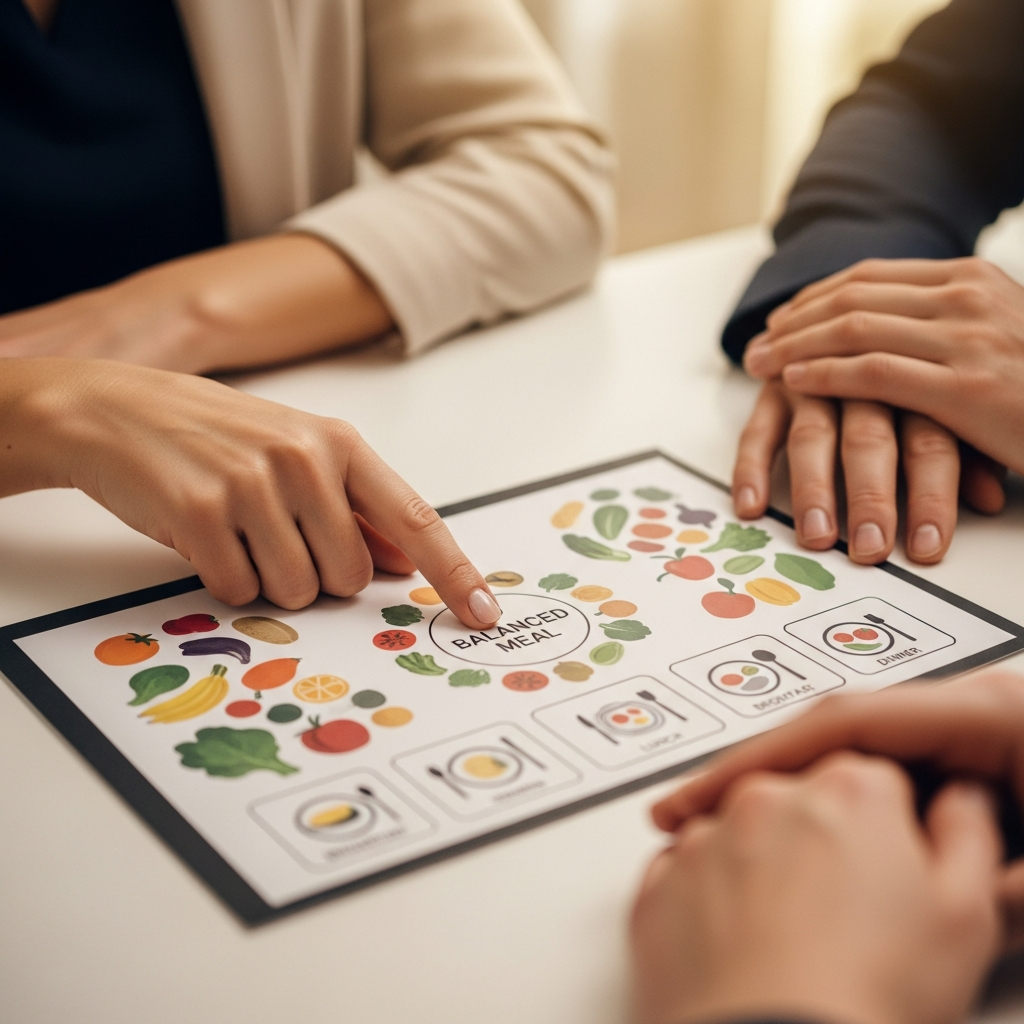
The most underrated tool is a repeatable meal template. Instead of asking “what should I eat,” you keep 2–3 breakfasts, 2–3 lunches, and a dinner framework you can rotate. That removes decision fatigue and makes tracking almost automatic.
A Greenville-friendly example: a protein-forward plate method where you keep protein consistent, then adjust portions of starch and fats based on progress and hunger cues. That kind of structure is often easier than strict dieting because it fits real life.
Wearables for steps and consistency
Wearables and phone step counters are helpful because they measure something you can control today: movement. You do not need extreme workouts to make progress, but consistent activity supports weight management and health.
The key is using wearable data for planning, not punishment. For example: if you had a low-step day because of work, you can plan a 15-minute walk after dinner instead of “starting over Monday.”
Where weight loss pills, meal replacements, and appetite support fit
This section is here because people search these topics a lot, but the safest way to think about them is as add-ons, not the foundation.
Weight loss pills (especially supplements): be careful with claims
Many products marketed for weight loss are sold as dietary supplements, and the evidence for many common ingredients is mixed. NIH’s Office of Dietary Supplements summarizes research and safety considerations for many weight-loss supplement ingredients.
A bigger concern is contamination or hidden drug ingredients. The FDA has published information about contaminated weight-loss products and warns that it cannot test every product on the market.
If you are considering any pill or supplement, treat it like a “medical decision,” not a casual purchase. Ask your clinician, especially if you have blood pressure issues, anxiety, heart conditions, or you take other medications.
Meal replacements (shakes or structured replacements): useful when you need simplicity
Meal replacements can be effective when they reduce decision fatigue and help you maintain a consistent calorie deficit. A systematic review and meta-analysis found programs incorporating meal replacements produced greater weight loss at 1 year than comparator programs, especially when paired with support.
The “support” piece matters. If you just swap in a shake but still struggle with evenings, weekends, or stress eating, you may not see lasting results. The best use case is a temporary structure: breakfast and lunch are simple, and you focus on building a repeatable dinner routine.
Appetite support (food-first strategies that work quietly)
Appetite support does not have to mean a stimulant or a supplement. Two of the most evidence-backed levers are fiber and protein. Fiber has been studied for effects on satiety and food intake, and protein is commonly associated with greater satiety compared with other macronutrients.
In practice, this looks like: protein at every meal, a high-fiber carb choice (beans, fruit, oats, vegetables), and enough water. It is not flashy, but it is repeatable, which is what wins.
A simple 30-day system to track, plan, and progress
You do not need 30 new habits. You need 3–4 behaviors you can keep.
Days 1–7: Set up your “minimum effective tracking”
✅ Pick one app and set a realistic goal (no crash dieting). Gradual loss is often more sustainable than rapid drops.
✅ Create 5 saved meals you eat often (so logging becomes one tap).
✅ Choose one weekly check-in day where you review the last 7 days (trend, not perfection).
Days 8–21: Add planning so dinner stops being the hardest part
Most people do fine until the end of the day. Planning fixes that.
Use a simple rule: decide dinner by lunchtime. Pre-log it or write it down. If dinner is handled, the day usually goes better.
If you want extra structure, pair your app with coaching and a clear plan. A clinic-based program in Greenville can add body composition tracking and accountability so you adjust faster when you hit a plateau.
Days 22–30: Tighten one lever (not everything)
Pick one lever based on your data:
-
If calories are high on weekends, plan one “anchor meal” and one planned treat.
-
If hunger is the issue, increase protein and fiber at breakfast and lunch.
-
If weight is flat but habits are good, focus on consistency for 2 more weeks before making big changes (water and stress matter).
This is how you avoid the loop of overcorrecting, burning out, and quitting.
Which option is best for Greenville and Pitt County residents?
Most people fall into one of three buckets: “I just need a tracker,” “I need structure,” or “I need structure plus medical oversight.” The best choice depends on your history, schedule, and health status.
Option
Best for
Pros
Watch-outs
Local next step
App-only tracking
Beginners who want awareness
Simple, low cost, quick feedback
Easy to drift without a plan
Start with the blog hub for education: Read our Blog
App + meal template
Busy adults who need less decision-making
More consistency, less friction
Needs a repeatable grocery routine
Use a Greenville-based plan page for structure: Weight Loss Program In Greenville, NC
App + coaching/program
Plateaus, yo-yo dieting, accountability needs
Adjustments happen faster; support during hard weeks
Requires commitment and honesty with tracking
Compare program styles and what’s included: Weight Loss Programs
Medical program + tracking tools
People with health concerns or repeated stalls
More individualized oversight and tracking
Not a shortcut; still requires habits
Learn about clinic-based support: Ways To Track Your Progress In The Weight Loss Journey
If you are in Winterville, Ayden, Farmville, or nearby, the best “time saver” is having a plan that tells you what to do when weight loss slows, hunger spikes, or you get off track for a week. That is where coaching and structured check-ins usually outperform app-only approaches.
📌 Related reading (helps you use any app better):
Ways to track your progress in the weight loss journey
How to lose weight fast with healthier, science-based strategies
Next step: request a consultation (and make the tools work together)
If you want help matching the right app, a realistic meal structure, and the accountability that keeps you consistent, request a consultation here: SCHEDULE AN APPOINMENT
Wrap-up: how to choose the best weight loss app for your lifestyle
The right tracker is the one you will actually use, the one that makes planning easier, and the one that gives you feedback you can act on. Combine it with one or two real-world supports (a simple meal template, trend tracking, and accountability), and you turn “trying” into a system that keeps working in Greenville, Winterville, Ayden, Farmville, and across Pitt County.
Frequently Asked Questions
How did Kelly Clarkson really lose weight?
Kelly Clarkson has said her weight loss came from “listening to my doctor” and using a prescription medication related to blood sugar that helps her body break down/process sugar, which she emphasized was not Ozempic. She’s also described lifestyle changes alongside that, including eating a “healthy mix” with a focus on protein and being more active (she’s mentioned walking more). The safest takeaway is that her approach was medically guided and personalized, especially if bloodwork or prediabetes is involved, a clinician should help decide what’s appropriate.
How can I drop 20 pounds fast?
Losing 20 pounds “fast” usually isn’t the safest goal, because most public-health guidance recommends a steady pace of about 1–2 pounds per week for better long-term results. At that rate, 20 pounds often takes roughly 10–20 weeks, and it typically requires a consistent calorie deficit plus activity. A practical, safer approach is eating mostly minimally processed foods, prioritizing protein and fiber for fullness, strength training to protect muscle, walking or other cardio most days, and tightening up sleep and alcohol/sugary drinks, while checking in with a clinician if you have medical conditions or take meds.
What is the most successful weight loss program?
There isn’t one universal “most successful” program, success is usually the plan you can stick with that matches your health needs. Evidence tends to favor structured programs that combine accountability, behavior change, and consistent self-monitoring. WeightWatchers (WW), for example, has randomized-trial evidence showing clinically meaningful weight loss for many participants over about a year. Digital programs like Noom also have published research in coaching-based, structured curricula (including diabetes-prevention style programs). If you have prediabetes, obesity-related conditions, or need medication support, the “best” program may be one that includes clinician oversight.
Is MyFitnessPal or lose it better?
MyFitnessPal is usually better if you want maximum food-database coverage, deep nutrition details, and lots of integrations, but key conveniences like barcode scanning have been Premium-only since October 2022, and Premium is advertised at $79.99/year. Lose It is often chosen for a simpler, more “just track it” experience and typically lower pricing; Apple’s App Store listing shows annual options including $39.99 (pricing varies by region and promos). On Reddit, many users say they prefer Lose It’s ease of use and value, especially for basic calorie tracking.
What is the most successful weight loss app?
The “most successful” app is usually the one you’ll actually use daily, because consistency matters more than brand. Research syntheses (including a Cochrane review) suggest weight-loss apps can have small or uncertain effects long term when used on their own, so apps tend to work best when they drive steady habits like regular logging, higher activity, and accountability. In practice, people often do best with either a strong tracker (to stay aware of intake) or a tracker plus coaching/lessons (to change habits), depending on what keeps them engaged. If logging triggers anxiety or disordered eating, choose a different approach.
Is Noom or MyFitnessPal better?
Noom is generally better if you want guided behavior change—daily lessons, psychology-style habit work, and structured coaching options—while MyFitnessPal is better if you mainly want flexible, detailed nutrition tracking (especially macros) without a “course.” Noom’s own pricing pages show plan costs can vary widely by commitment length, while MyFitnessPal’s paid tiers are more straightforward. On Reddit, a common theme is that MyFitnessPal can feel more powerful for pure tracking, while Noom can feel more motivating for building routines. If you want “coach + structure,” lean Noom; if you want “data + control,” lean MyFitnessPal.