

Best Exercise for Weight Loss: Walking, Strength Training, and Cardio Plans That Fit Real Life
The best exercise for weight loss is the one you can repeat most weeks, and for most people that means combining walking, strength training, and a little cardio in a way that fits your schedule. If you live in Greenville, Winterville, Ayden, Farmville, or anywhere in Pitt County, the goal is not perfection, it is a plan you can run on busy weeks and still feel good doing.
This page shows you why each style matters, how to use it without burning out, and which option usually works best based on your lifestyle. (General info only. If you have medical conditions, pain, are pregnant/postpartum, or take medications that affect heart rate or blood sugar, check with your clinician before changing exercise or calories.)
📌Want support and structure from a local team? Start a program
Why exercise works best when it supports a calorie deficit (not fights your life)
Weight loss happens when your body uses more energy than it takes in over time. Exercise helps by increasing your daily burn, improving sleep and mood, and making it easier to stay consistent with nutrition. But if workouts leave you exhausted, starving, or injured, they backfire.
A safer, more sustainable target for many people is gradual loss. The CDC notes that people who lose weight at a steady pace (about 1–2 pounds per week) are more likely to keep it off.
Think of exercise as your “consistency engine”:
-
Walking builds weekly volume without beating you up.
-
Strength training helps protect muscle while you lose fat.
-
Cardio adds a boost when your base habits are solid.
📌If you want a simple explanation of energy balance, read: Calorie deficit for weight loss
Walking for weight loss (the most repeatable tool in real life)
Walking is underrated because it feels “too easy,” but it is one of the easiest ways to build weekly activity without needing recovery days. It also tends to be easier to restart after travel, stress, or a busy week, which is exactly why it works long-term.
A practical target many adults can build toward is the general activity guideline of 150 minutes of moderate activity per week (walking counts) plus 2 days of muscle-strengthening.

How to make walking count without turning it into “all day cardio”
You do not need marathon walks. Instead, focus on a few simple levers:
-
Pace: aim for a brisk pace where you can talk, but you would rather not sing.
-
Time: start at 20–30 minutes most days, then extend 5–10 minutes as it feels easier.
-
Progression: add hills, a slight incline, or short faster segments (example: 1 minute faster, 2 minutes easy, repeat 6–8 times).
Local-friendly ideas in Pitt County
If you like getting outside, Greenville has a greenway system that runs through parks and along the Tar River, making it a solid option for walking or light jogging.
In Winterville, a simple “laps plan” at a local park can work well when time is tight (even 10-minute loops add up).
📌Related reading: Weight loss benefits of walking every day
Strength training (the “metabolism insurance” most people skip)
If your plan is only cardio, you might lose weight, but you risk losing muscle along with it, especially if protein is low and calories drop too hard. Strength training gives your body a reason to keep muscle while you lose fat, and that helps your shape, energy, and long-term maintenance.
You do not need long sessions. Two short, full-body days per week is a great start.
A simple 2-day strength setup that fits real life
Keep it basic and repeatable. Pick 5–6 movements, 2–3 sets each:
✅ squat pattern (chair squat or goblet squat)
✅ hinge pattern (hip hinge or light deadlift pattern)
✅ push (incline push-up or dumbbell press)
✅ pull (row variation or band row)
✅ carry or core (farmer carry, dead bug, plank)
The goal is “leave one or two reps in the tank,” not crush yourself. Soreness is not the metric. Consistency is.
📌Related reading: How is strength training beneficial for weight loss?
Cardio and intervals (when you want extra momentum)
Cardio is useful, but it works best after your walking and strength habits are in place. Think of it like seasoning, not the whole meal.
Two smart options:
-
Steady cardio (moderate): cycling, elliptical, swimming, brisk treadmill walking
-
Short intervals (HIIT-lite): brief hard efforts with longer recovery
If you are new, keep intervals limited to 1–2 sessions weekly. More is not better if it spikes hunger, worsens sleep, or causes aches.

📌Movement-related post: Best cardio exercises for weight loss
Table: Walking vs strength vs cardio (what each one is best for)
| Exercise type | What it does best | Who it fits best | Simple starting point |
|---|---|---|---|
| Walking | Builds weekly calorie burn with low recovery cost | Beginners, busy schedules, joint-sensitive | 20–30 min, 4–6 days/week |
| Strength training | Protects muscle and supports body recomposition | Anyone losing weight, especially over 30 | 2 days/week, 25–40 min |
| Moderate cardio | Adds conditioning and extra weekly burn | People who enjoy machines/classes | 1–2 days/week, 20–40 min |
| Short intervals | Time-efficient “push” (when appropriate) | Intermediate, cleared by clinician | 10–20 total hard minutes/week |
How many calories to lose weight (without getting stuck in math)
You can lose weight without tracking every bite, but it helps to understand the “size” of the deficit you are creating.
A common starting point for many adults is reducing intake by about 500 calories per day, which is often estimated to support about 1 pound per week of weight loss (individual results vary).
A simple, low-stress way to set a calorie target
Instead of chasing a perfect number:
-
Set a “normal day” baseline (what you usually do).
-
Make one or two changes you can repeat (example: protein-focused breakfast, fewer liquid calories, or a planned afternoon snack).
-
Use walking to add a small daily burn without increasing hunger too much.
If you have a history of disordered eating, focus on behaviors (protein, portions, steps, strength) rather than strict calorie targets.
High protein diet for weight loss (why it helps and how to do it)
A high protein diet for weight loss can help in three practical ways: it supports fullness, makes meals more satisfying, and helps preserve muscle when you are in a calorie deficit. This matters even more if you are strength training.
A good “real life” approach is to include a protein source at every meal and aim for a consistent pattern, not a perfect macro split.
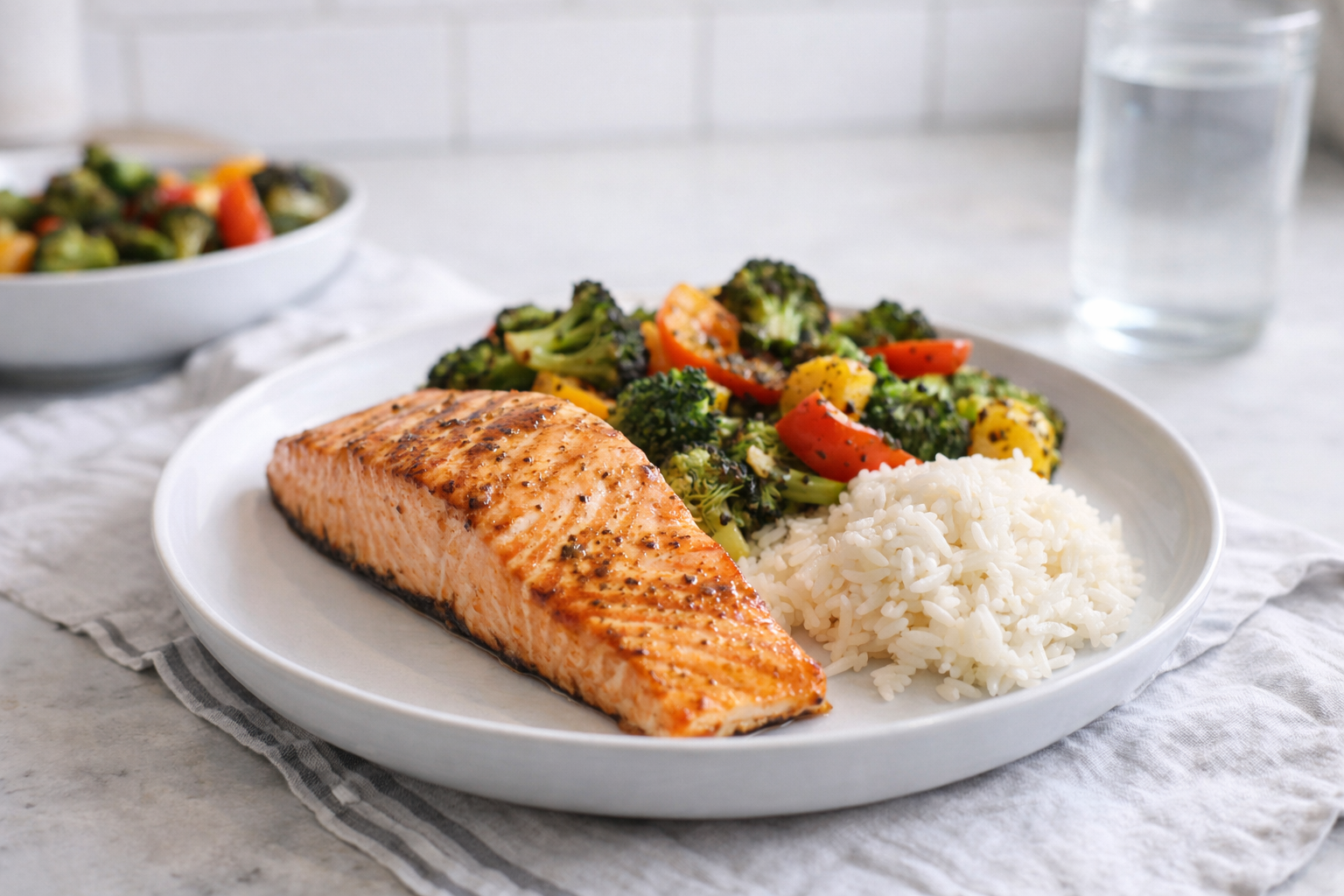
💡Practical tip: If dinner is your toughest meal, decide your protein first (chicken, fish, lean beef, tofu, Greek yogurt-based sauce), then build the rest around it.
📌Related reading: Unveiling the power of protein for weight loss
weight loss dinner ideas that feel normal (not like dieting)
Dinner is where most people either save the day or lose the plan. The easiest fix is to keep a few default meals on repeat and rotate flavors.
Here are “template” weight loss dinner ideas you can mix and match without overthinking:
✅ Protein + roasted veggie + small carb: salmon + broccoli + a small portion of rice or potatoes
✅ Protein bowl: taco-seasoned turkey + lettuce + beans + salsa + Greek yogurt
✅ Sheet pan dinner: chicken thighs (or tofu) + mixed veggies + olive oil + seasoning
✅ High-protein pasta night: lentil/chickpea pasta + marinara + extra lean meat or cottage cheese mixed into sauce
✅ Breakfast-for-dinner: veggie omelet + side salad
If you eat out in Greenville or nearby towns, use the same template: choose a protein-forward entrée, add vegetables, and be intentional with liquids and sides.
3 cardio + strength + walking plans that fit real schedules
These plans are built around consistency, not punishment. If a week goes sideways, you can “downshift” without quitting.
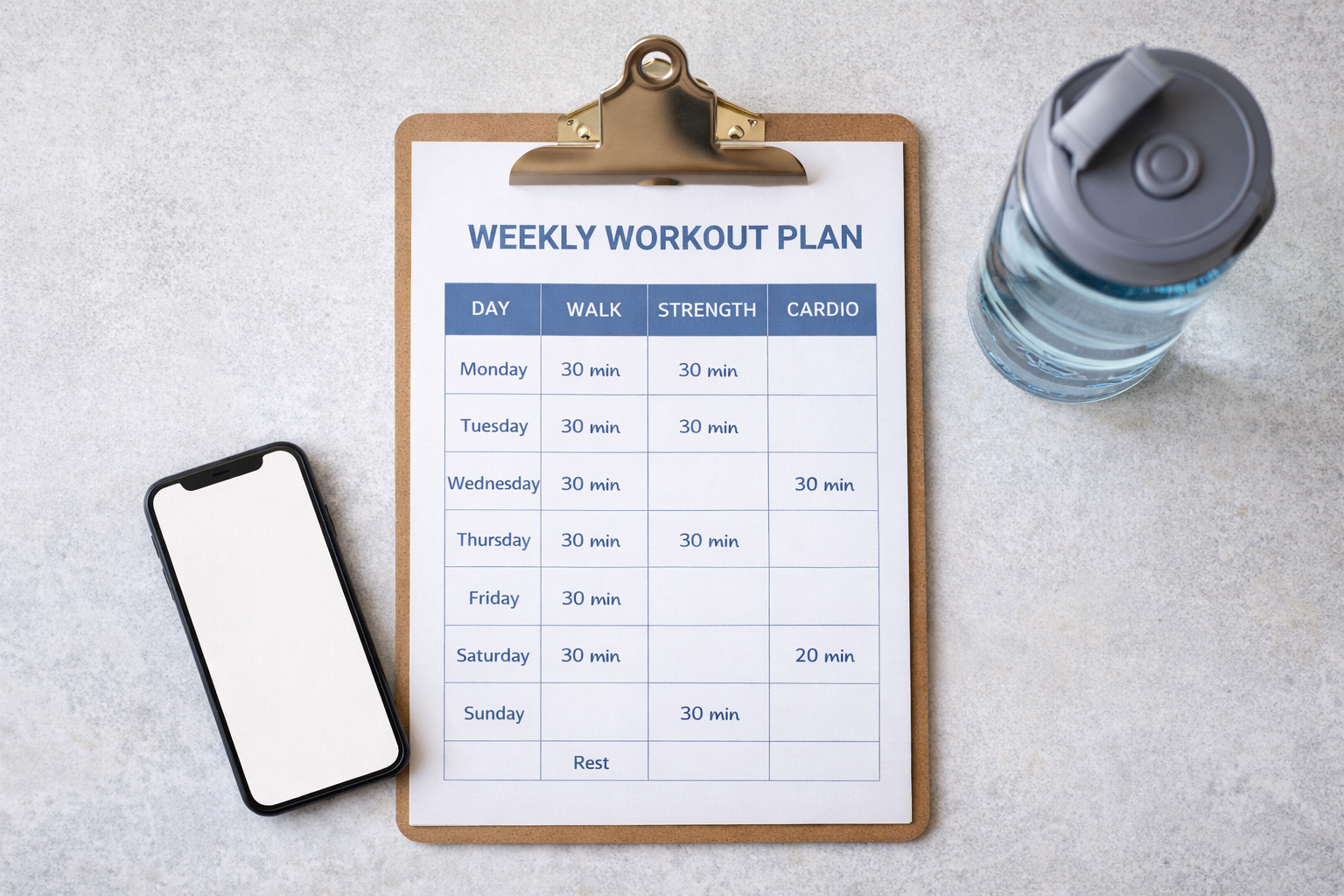
| Plan | Weekly walking | Weekly strength | Weekly cardio | Best for |
|---|---|---|---|---|
| Starter (low barrier) | 20–30 min, 5 days | 2 x 25 min | Optional 1 x 20 min | New to exercise, rebuilding habits |
| Busy schedule (time-capped) | 15–20 min, 6 days (can be split) | 2 x 30 min | 1 x 25–30 min | Parents, shift work, packed weeks |
| Momentum plan (intermediate) | 30–45 min, 4–6 days | 2 x 35–45 min | 1–2 sessions (one can be intervals) | Plateau breakers, higher fitness |
“Which one is best?” How to choose based on your real life
If you are deciding what to prioritize, use this simple filter:
-
If your schedule is chaotic, choose walking + 2 strength days first.
-
If you love classes or running, keep it, but still do 2 strength days.
-
If you have pain, choose low-impact cardio and build strength with joint-friendly moves.
The “best” plan is the one that still happens when motivation drops. That is why walking and strength show up in almost every effective long-term approach.
Trend check: the 30 30 30 rule and the 2 2 2 rule (what they mean and when they help)
You may see viral rules that sound simple, and sometimes they are helpful as training wheels.
-
30-30-30 rule: eat 30 grams of protein within 30 minutes of waking, then do 30 minutes of low-intensity exercise. It can be a useful morning structure, but it is not magic.
-
2-2-2 method: there are multiple versions online; one popular version focuses on 2 fruits, 2 vegetables, 2 liters of water, and 2 walks daily. It can work as a habit checklist, but it is not a universal medical plan.
If rules make you more consistent, use them. If they make you obsessive or all-or-nothing, skip them.
Want a structured plan in Greenville, NC (with accountability)?
Many people already “know” what to do. What they need is structure, a realistic plan, and accountability when life gets busy.
If you want a local option in Greenville serving Winterville, Ayden, Farmville, and Pitt County:
-
Book your consult: Start a program
Final takeaway
Your plan does not have to be extreme to work. Build a base with walking, protect your progress with strength training, and add cardio strategically. If you want the simplest rule to remember, make it this: the best exercise for weight loss is the one that still fits on your hardest week.
Frequently Asked Questions
What’s the most effective exercise to lose weight fast?
The fastest “bang for your time” is usually a mix of high-intensity interval training (HIIT) plus full-body strength training, because HIIT can be as effective as (or slightly better than) steady cardio for fat loss while taking less time, and lifting helps preserve muscle so more of your weight loss comes from fat. For real-world results, the most effective plan is the one you can repeat weekly: aim to build toward 150–300 minutes of cardio per week and lift at least twice weekly, as major guidelines recommend.
How do I drop 20 pounds fast?
“Fast” but still safe is typically 1–2 pounds per week, which puts 20 pounds at about 10–20 weeks for many people. The most reliable approach is a consistent calorie deficit (often around 500–750 calories/day), high-protein, high-fiber meals to control hunger, and enough activity to support the deficit—think regular walking plus a couple days of strength training. Rapid loss can raise risks like gallstones, so if you’re trying to lose very quickly or have medical conditions, do it with clinician guidance.
What is the 30 30 30 rule for weight loss?
The 30-30-30 rule is a morning routine popularized online: eat 30 grams of protein within 30 minutes of waking, then do 30 minutes of low-intensity exercise (often steady walking). It can help some people because a protein-rich breakfast may improve fullness and making exercise “automatic” increases consistency, but there’s little evidence that the exact timing is magical—overall daily calories, protein intake, and weekly activity matter more. You’ll also find mixed real-world experiences in communities discussing whether it’s helpful or just a repackaged habit hack.
What is the 2 2 2 rule for weight loss?
What’s the most effective exercise to lose weight fast?
The fastest “bang for your time” is usually a mix of high-intensity interval training (HIIT) plus full-body strength training, because HIIT can be as effective as (or slightly better than) steady cardio for fat loss while taking less time, and lifting helps preserve muscle so more of your weight loss comes from fat. For real-world results, the most effective plan is the one you can repeat weekly: aim to build toward 150–300 minutes of cardio per week and lift at least twice weekly, as major guidelines recommend.
How do I drop 20 pounds fast?
“Fast” but still safe is typically 1–2 pounds per week, which puts 20 pounds at about 10–20 weeks for many people. The most reliable approach is a consistent calorie deficit (often around 500–750 calories/day), high-protein, high-fiber meals to control hunger, and enough activity to support the deficit—think regular walking plus a couple days of strength training. Rapid loss can raise risks like gallstones, so if you’re trying to lose very quickly or have medical conditions, do it with clinician guidance.
What is the 30 30 30 rule for weight loss?
The 30-30-30 rule is a morning routine popularized online: eat 30 grams of protein within 30 minutes of waking, then do 30 minutes of low-intensity exercise (often steady walking). It can help some people because a protein-rich breakfast may improve fullness and making exercise “automatic” increases consistency, but there’s little evidence that the exact timing is magical—overall daily calories, protein intake, and weekly activity matter more. You’ll also find mixed real-world experiences in communities discussing whether it’s helpful or just a repackaged habit hack.
What is the 2 2 2 rule for weight loss?
“2-2-2” isn’t one universal rule—it’s mostly a social-media label that can refer to different routines—but a widely discussed version ties to Dr. Ian K. Smith’s “Met Flex” approach and bundles multiple tactics (cycling meal types like higher-fat vs higher-carb, accountability habits like weekly weigh-ins/journaling, and structured workouts). Even that source notes the “2-2-2” wording isn’t actually the book’s formal language and that large clinical studies testing the full method are lacking. If you try any “2-2-2” plan, prioritize something you can sustain and that doesn’t trigger restrictive/binge cycles.
How did Kelly Clarkson really lose weight?
Kelly Clarkson has said her weight loss came from following her doctor’s advice, including eating a protein-forward “healthy mix,” becoming more active (she’s mentioned walking more after moving to New York City), and addressing health markers like prediabetes. She later clarified that she also used a prescription medication—specifically saying it was not Ozempic—and described it as something that helps her body “break down sugar,” after her doctor encouraged it due to bloodwork concerns.
How long will it take to lose 30 pounds on a 1200 calorie diet?
If a 1,200-calorie intake creates a steady, sustainable deficit for you, a common safe loss rate is about 1–2 pounds per week, so 30 pounds often works out to roughly 15–30 weeks (around 4–8 months). The catch is that the deficit (and your rate) changes as your body adapts and your weight drops, so timelines aren’t perfectly linear. Also, 1,200 calories is quite low for many adults and can be hard to meet nutrition needs without planning, so it’s smart to check in with a clinician or dietitian—especially if you have thyroid issues, diabetes, or a history of disordered eating.